Movie spotlight
The Green Line
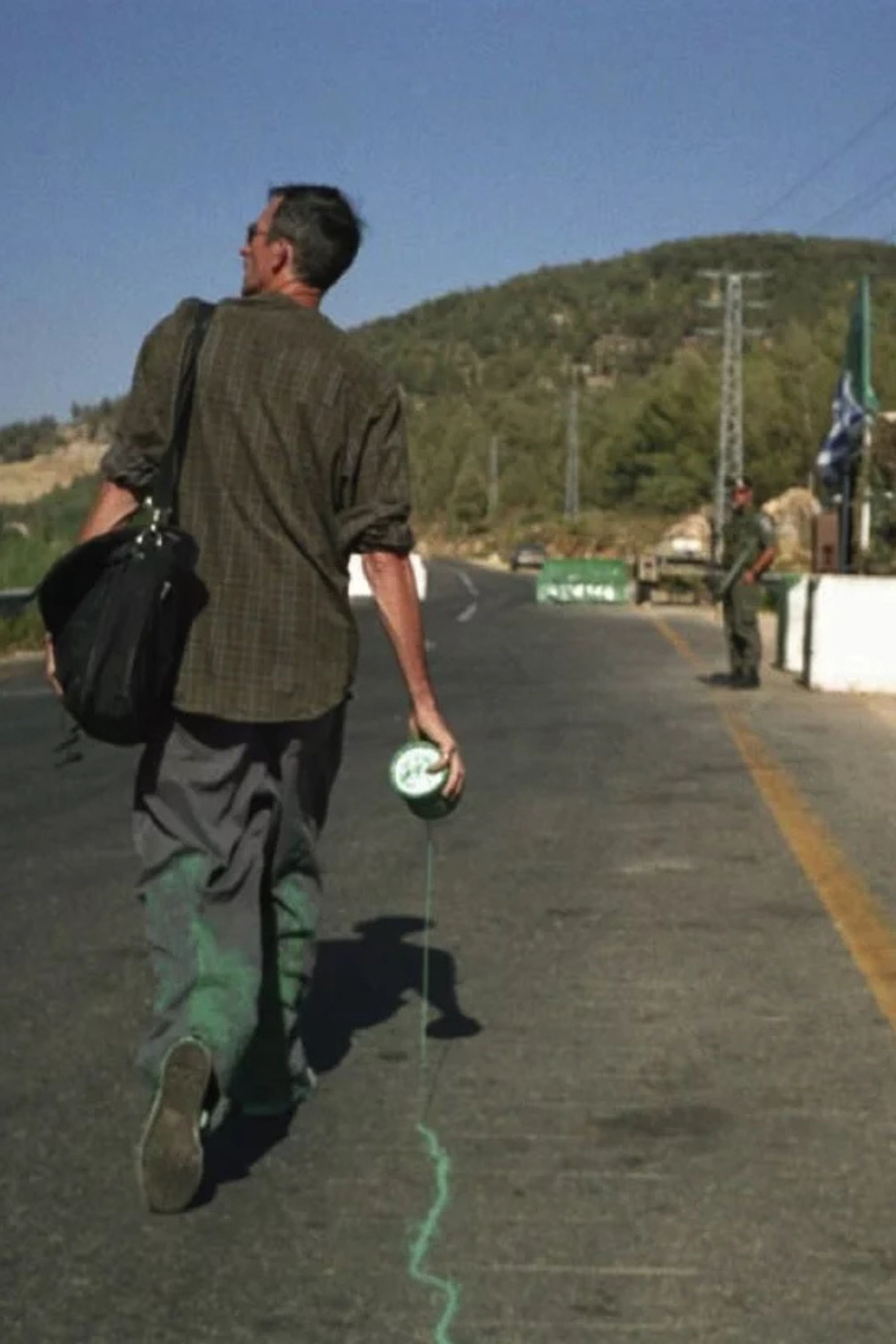
In The Green Line, for which the axiom was ‘sometimes the political is poetic, sometimes the poetic is political’, Alÿs walks holding a punctured can of dribbling green paint along the contested width of the so-called Green Line established between Israel and its neighbours following the 1948 Arab–Israeli War. In formal terms, The Green Line is a reenactment of an earlier work, The Leak (1996), in which the artist took a can dribbling blue paint for a walk and installed the empty container in the gallery. By recontextualising The Leak in geopolitical terms, Alÿs relocates the tensions in the work from those formal ideas of action and painting to questions of maps and territories and who has the right to live where.
Insights
Plot Summary
This documentary explores the complex Israeli-Palestinian conflict, focusing on the impact of the Israeli occupation on Palestinian lives and the political landscape. It delves into the daily realities faced by Palestinians living under military control and the various forms of resistance and adaptation that have emerged.
Critical Reception
The Green Line received critical attention for its unflinching look at the occupation and its human cost. Critics praised its commitment to presenting a Palestinian perspective, though some noted its inherent bias due to its focus and the perspectives interviewed. It was recognized for its importance in documenting the lived experiences within the occupied territories.
What Reviewers Say
Offers a powerful and often harrowing perspective on the Israeli occupation.
Highlights the resilience and struggles of Palestinians.
Praised for its documentary filmmaking and commitment to its subject matter.
Google audience: Information on Google user reviews for this specific documentary is not readily available.
Awards & Accolades
Screened at various film festivals, including the Rotterdam International Film Festival.
Fun Fact
The film's title, 'The Green Line,' refers to the 1949 Armistice Lines established by the UN that marked the border between Israel and its neighboring Arab states, and which later became synonymous with the occupied territories.
AI-generated overview · Verify ratings on official sources