
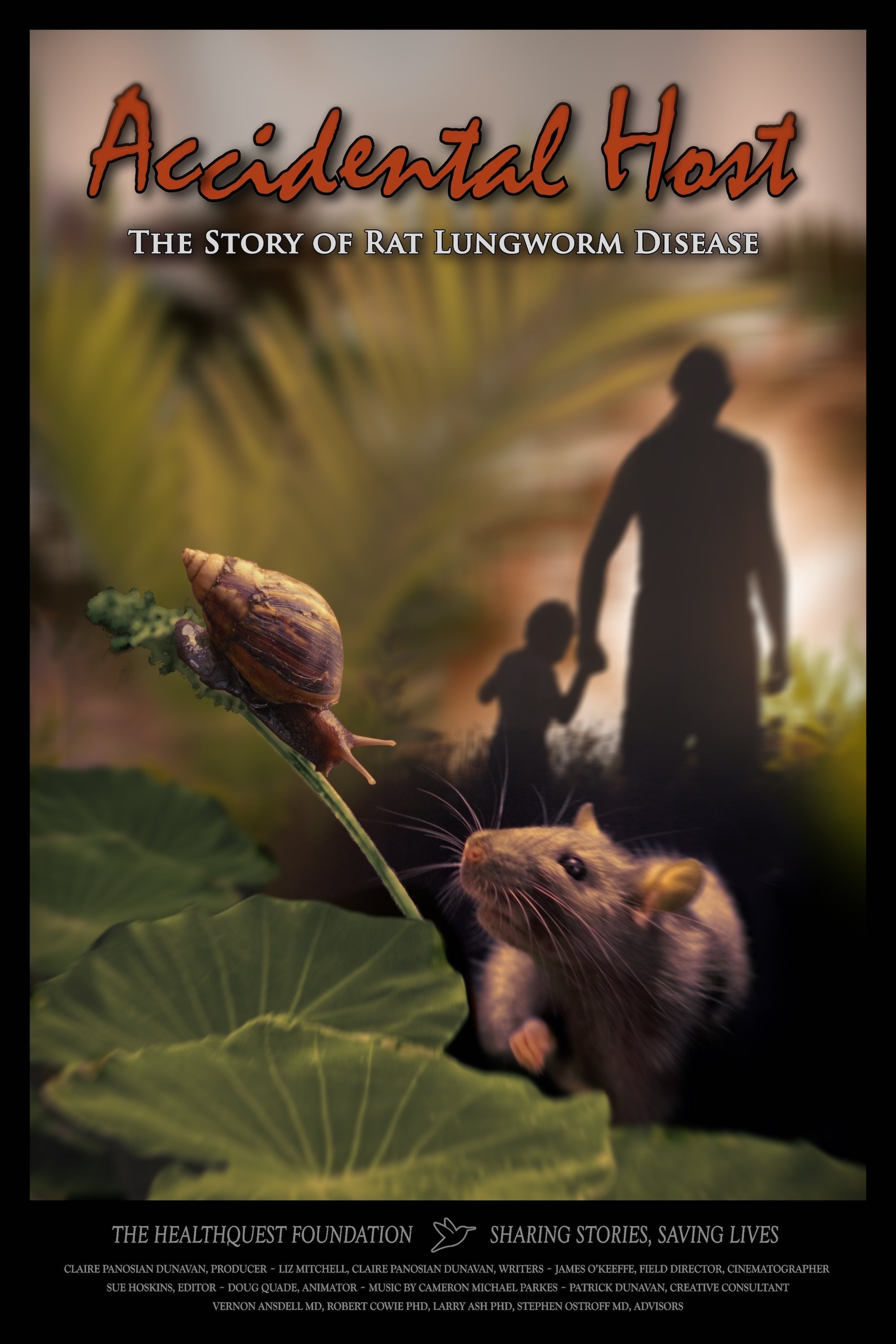
Accidental Host: The Story of Rat Lungworm Disease
From an infant who wound up in the ICU to a surfer who had to relearn to walk and talk after the parasite crept into his nervous system, the documentary gives an eye-opening look into the potentially catastrophic consequences of Rat Lungworm disease shared through several accounts from Hawaiʻi residents on their battles with the parasite.
Insights
Plot Summary
This documentary series delves into the harrowing and often misunderstood world of Angiostrongyliasis, commonly known as rat lungworm disease. It explores the origins of the parasitic nematode Angiostrongylus cantonensis, its spread through various hosts, and the devastating neurological effects it can have on humans. The series highlights personal stories of infection and recovery, alongside scientific explanations of the disease's transmission and prevention.
Critical Reception
As a relatively new and niche documentary series focusing on a specific medical topic, "Accidental Host: The Story of Rat Lungworm Disease" has received positive attention within relevant medical and public health communities for its educational value and clear presentation of complex information. While widespread critical reviews are not abundant, its approach to raising awareness about a potentially serious and preventable disease has been commendably received.
What Reviewers Say
- Praised for its thoroughness in explaining a complex parasitic infection.
- Appreciated for its role in raising public awareness about rat lungworm disease.
- Commended for presenting scientific information in an accessible format for a general audience.
Google audience: Audience feedback, where available, often highlights the documentary's effectiveness in educating viewers about the risks and symptoms of rat lungworm disease, encouraging vigilance in food preparation and handling.
Fun Fact
Rat lungworm disease is primarily transmitted to humans through the consumption of infected slugs or snails, or by eating produce contaminated with slug or snail slime, rather than directly from rats themselves.
AI-generated overview · Verify ratings on official sources