
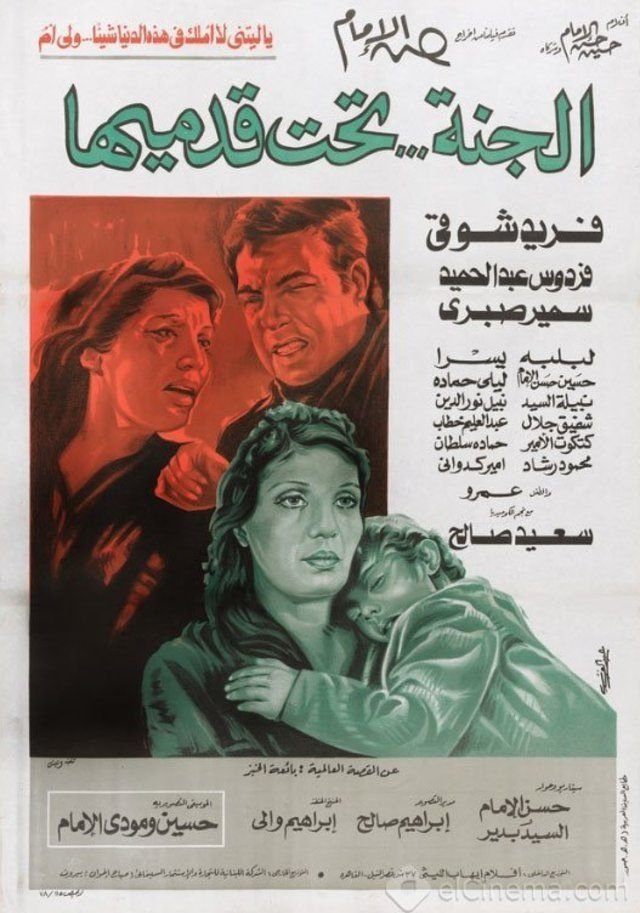
El-Ganna Taht Qadmeha
(Zainab) works in a factory to raise her daughter (Nemat) and son (Hussein), but she refuses to marry (Ayoub). The factory owner tries to trap Zainab, but she pushes him back. So Ayoub decides to burn the factory, rob and kill its owner, the crime succeeds, he changes his personality, and becomes rich, and (Zainab) is accused of the crime and imprisoned, (Hussein) grows up, and becomes a lawyer, while (Nemat) works as a tailor, and she believes that getting rich by any means is the solution. (Zainab) escapes from prison to meet her children, and searches for evidence of her innocence, which is a letter hidden by her brother (Ahmed).
Insights
Plot Summary
The film tells the story of a young woman, Soad Hosny, who is married to a wealthy and older man. Despite her comfortable life, she feels unfulfilled and yearns for true love and freedom. Her journey involves navigating societal expectations, personal desires, and the complexities of relationships, ultimately seeking a life beyond the gilded cage she inhabits.
Critical Reception
The film was a significant release in Egyptian cinema, lauded for its strong performances, particularly from its lead actress, and its sensitive portrayal of a woman's emotional struggles within a patriarchal society. It resonated with audiences for its themes of independence and the search for happiness, though some critics noted its deliberate pacing.
What Reviewers Say
- Praised for Soad Hosny's compelling performance.
- Appreciated for its exploration of female desire and societal constraints.
- Noted for its atmospheric direction and emotional depth.
Google audience: Audience reception generally highlights the film's emotional resonance and the iconic performance of Soad Hosny, with many finding it a poignant depiction of personal struggle.
Fun Fact
The film's title translates to 'Heaven Under Her Feet,' a metaphorical reference to the sacrifices and desires of women.
AI-generated overview · Verify ratings on official sources