Movie spotlight
Empire
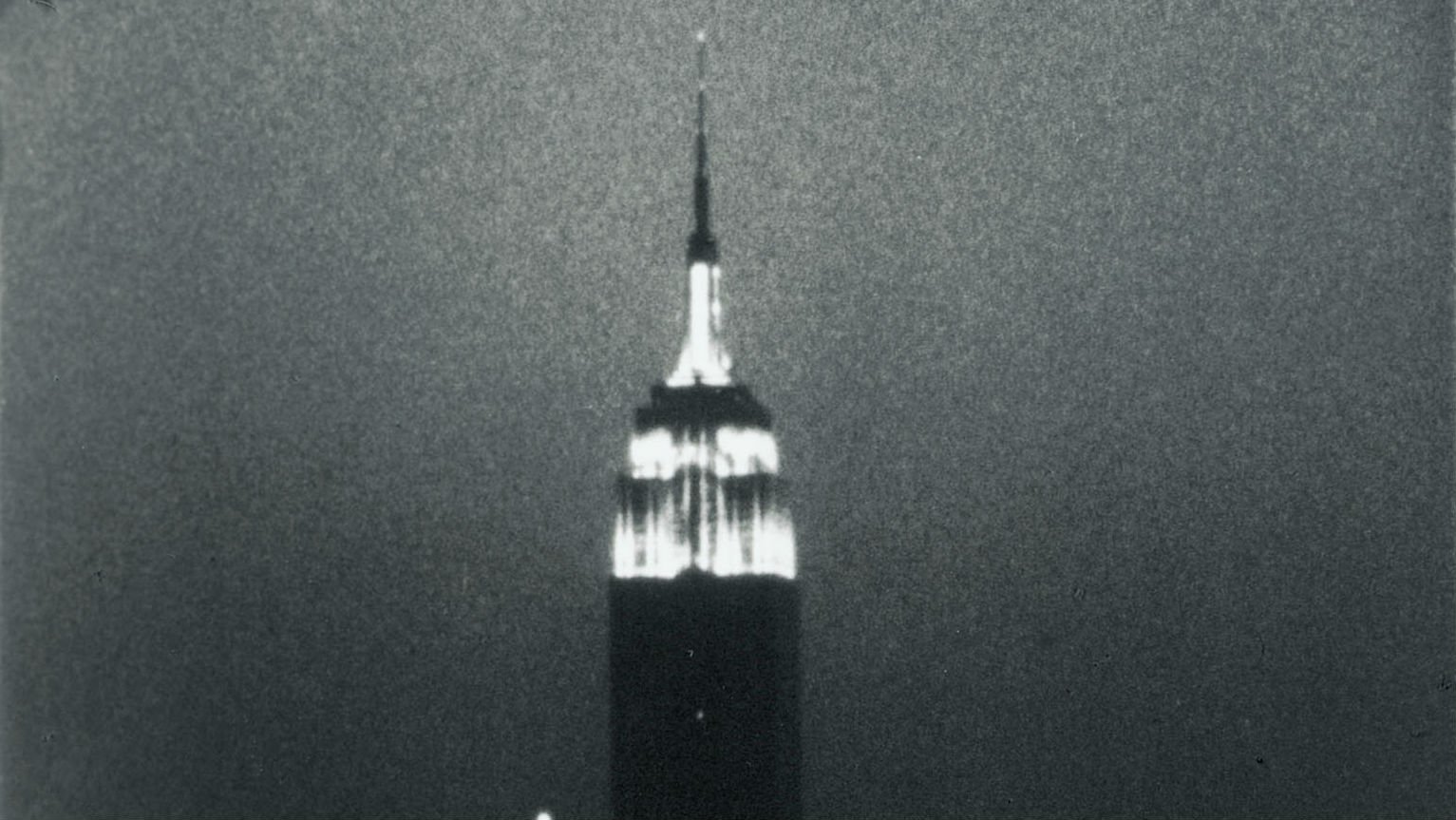
Filmed by Jonas Mekas from the 44th floor of the Time-Life Building, “Empire” explores the passage of time without the use of characters or a traditional narrative. The film, that consists of one stationary shot of the Empire State Building, was made from standard 1,200-foot rolls of 16mm film with a more than eight-hour runtime.
Insights
Plot Summary
Empire is a minimalist film consisting of a single, static shot of the Empire State Building. The film documents the building over the course of a night and into the early morning, capturing the subtle changes in light and the gradual appearance of lights within the structure. It is an exploration of time, observation, and the act of looking.
Critical Reception
Empire is considered a seminal work of underground and experimental cinema. While its runtime and lack of traditional narrative make it challenging for mainstream audiences, it is highly regarded by critics and art historians for its conceptual rigor and its unique approach to filmmaking. It is often viewed as a meditation on urban existence and the passage of time.
What Reviewers Say
A landmark in experimental film, pushing the boundaries of duration and subject matter.
Challenges viewers with its extreme duration and static perspective, offering a unique observational experience.
Praised for its conceptual boldness and its abstract depiction of a New York City icon.
Google audience: Audience reception is difficult to gauge due to its niche status, but it is acknowledged as a significant piece of art film history.
Awards & Accolades
None notable (considered a foundational piece of American avant-garde cinema)
Fun Fact
The entire film was shot on a single roll of 16mm film stock, which was the maximum length available at the time for a single take.
AI-generated overview · Verify ratings on official sources