
Movie spotlight
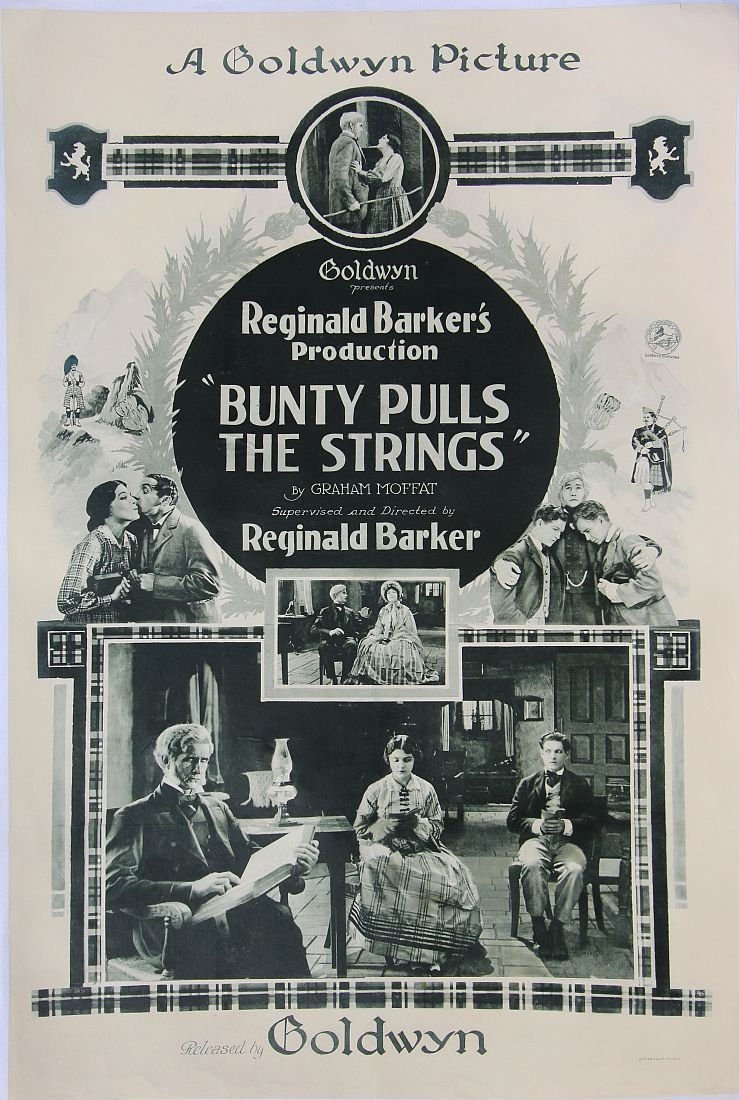
Bunty Pulls the Strings
A woman named Bunty Bigger struggles to keep her family in line in a small Scottish village. For one, her brother Jeemy faces jail time for robbing a bank. Meanwhile, her father, Tammas, pays back the stolen money with funds given him by Susie Simpson, a woman who hopes to marry him. Susie gets angry, so Bunty borrows money to pay her back. Things turn out well when Bunty gets married in a double-wedding ceremony—during which her father not only gives her away but gets married himself. The movie is based on a play by Graham Moffat. The film is lost.
Insights
Plot Summary
In a Scottish village, the vivacious Bunty is determined to arrange marriages for her acquaintances, often with humorous and chaotic results. She schemes and manipulates, believing she knows what's best for everyone's romantic lives. However, her meddling leads to a series of misunderstandings and complications that test the patience of the villagers.
Critical Reception
As a silent comedy from the early 1920s, "Bunty Pulls the Strings" was generally well-received by audiences of its time for its lighthearted humor and charming portrayal of village life. Contemporary reviews likely focused on its comedic timing and the performances of its cast, particularly the actress playing Bunty.
What Reviewers Say
Praised for its lighthearted and amusing comedic scenarios.
Appreciated for its charming depiction of rural Scottish life.
The plot's effectiveness relied heavily on the comedic performance of the lead.
Google audience: Audience reception data for this early silent film is not readily available.
Fun Fact
Cecil Hepworth was a pioneering British filmmaker, and "Bunty Pulls the Strings" was one of his many contributions to early cinema, showcasing the evolving landscape of filmmaking in the post-WWI era.
AI-generated overview · Verify ratings on official sources