
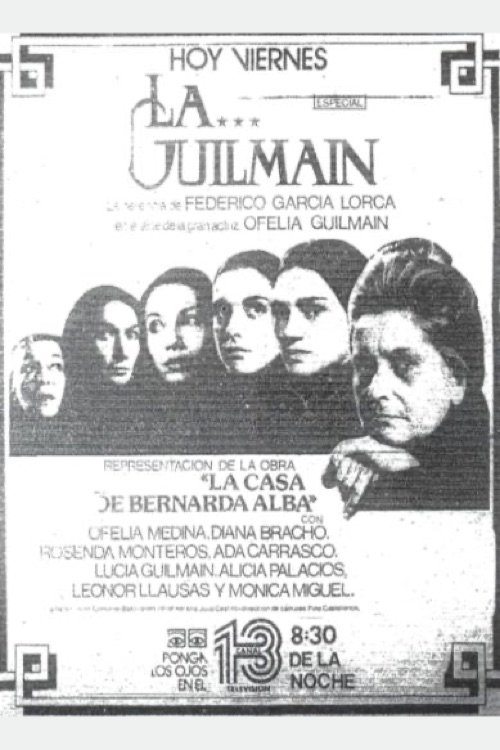
La casa de Bernarda Alba
Bernarda, a domineering, reclusive, and ostentatiously pious widow in a small Spanish town, keeps such close watch on her daughters that they are unable to have normal social lives. However, the eldest is allowed to become engaged to an unprincipled young man.
Insights
Plot Summary
In a repressive rural Spanish village, the tyrannical matriarch Bernarda Alba imposes a strict eight-year mourning period on her five daughters following the death of her second husband. Confined to their isolated home, the sisters are consumed by their longing for freedom, love, and marriage, leading to simmering tensions, forbidden desires, and ultimately, tragedy. The play explores themes of oppression, desire, social class, and the destructive consequences of patriarchal control.
Critical Reception
La casa de Bernarda Alba, a film adaptation of Federico García Lorca's play, has been recognized for its powerful portrayal of female oppression and social critique. While specific critical reception for the 1974 film adaptation is less documented than the play itself, the source material is universally acclaimed for its dramatic intensity and poetic language. The film is noted for its faithful adaptation and strong performances, contributing to its status as a significant work in Spanish cinema.
What Reviewers Say
- Praised for its intense dramatic performances, particularly from the lead actresses.
- Lauded for its stark and effective depiction of confinement and social repression.
- Recognized as a powerful and unflinching exploration of female desire and societal limitations.
Google audience: Information on Google user reviews for this specific film adaptation is not readily available.
Fun Fact
Federico García Lorca, the author of the play on which the film is based, was tragically murdered by Nationalist forces during the Spanish Civil War, and his works were subsequently banned in Spain until after the Franco regime.
AI-generated overview · Verify ratings on official sources