
Movie spotlight
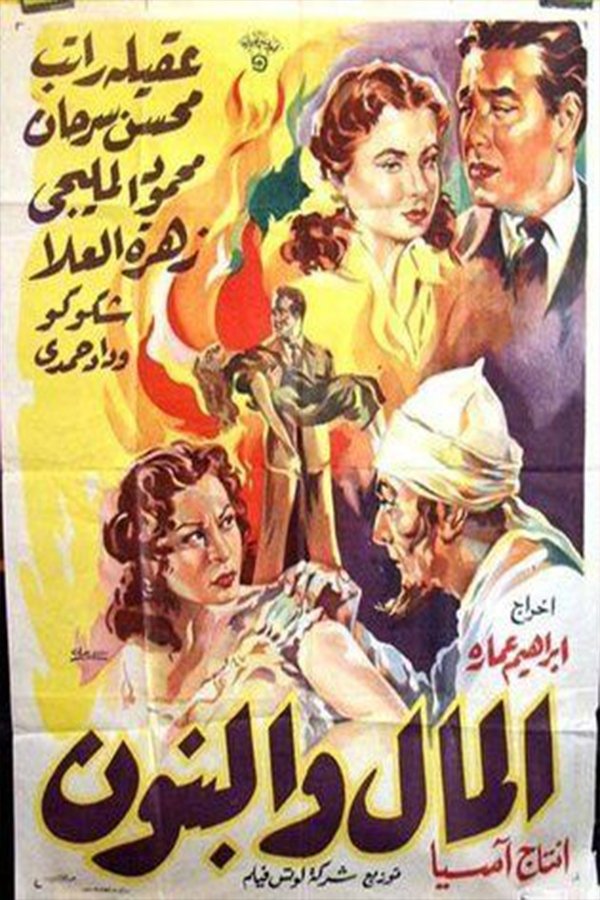
Al-Mal W'al-Banun
Two friends are married and happy, and each of them has his own life ideas. The first believes that he must limit children and be content with his only child. He forces his wife to take medication so that she will not have children again. As for the second friend, he has many children. The first friend’s only daughter dies, his financial conditions improve, and he becomes a man. He is rich and thinks he can have children.
Insights
Plot Summary
The film tells the story of a wealthy merchant who is deeply attached to his possessions and his children. When a crisis strikes, he must confront his values and priorities, learning the true meaning of wealth and family.
Critical Reception
Al-Mal W'al-Banun is considered a significant work in early Egyptian cinema, praised for its social commentary and strong performances. It resonated with audiences for its exploration of themes relevant to Egyptian society at the time, though specific modern critical reviews are scarce.
What Reviewers Say
Praised for its exploration of wealth, family, and societal values.
Features strong performances from its lead actors, particularly Farid Shawqi.
A notable example of Youssef Chahine's early directorial style.
Google audience: Information on Google user reviews for this specific classic Egyptian film is not readily available.
Fun Fact
This film was one of Youssef Chahine's early directorial efforts before he became one of Egypt's most celebrated filmmakers.
AI-generated overview · Verify ratings on official sources