Satyricon
Satyricon

Movie spotlight

Satyricon

1969
Movie
129 min
Italian

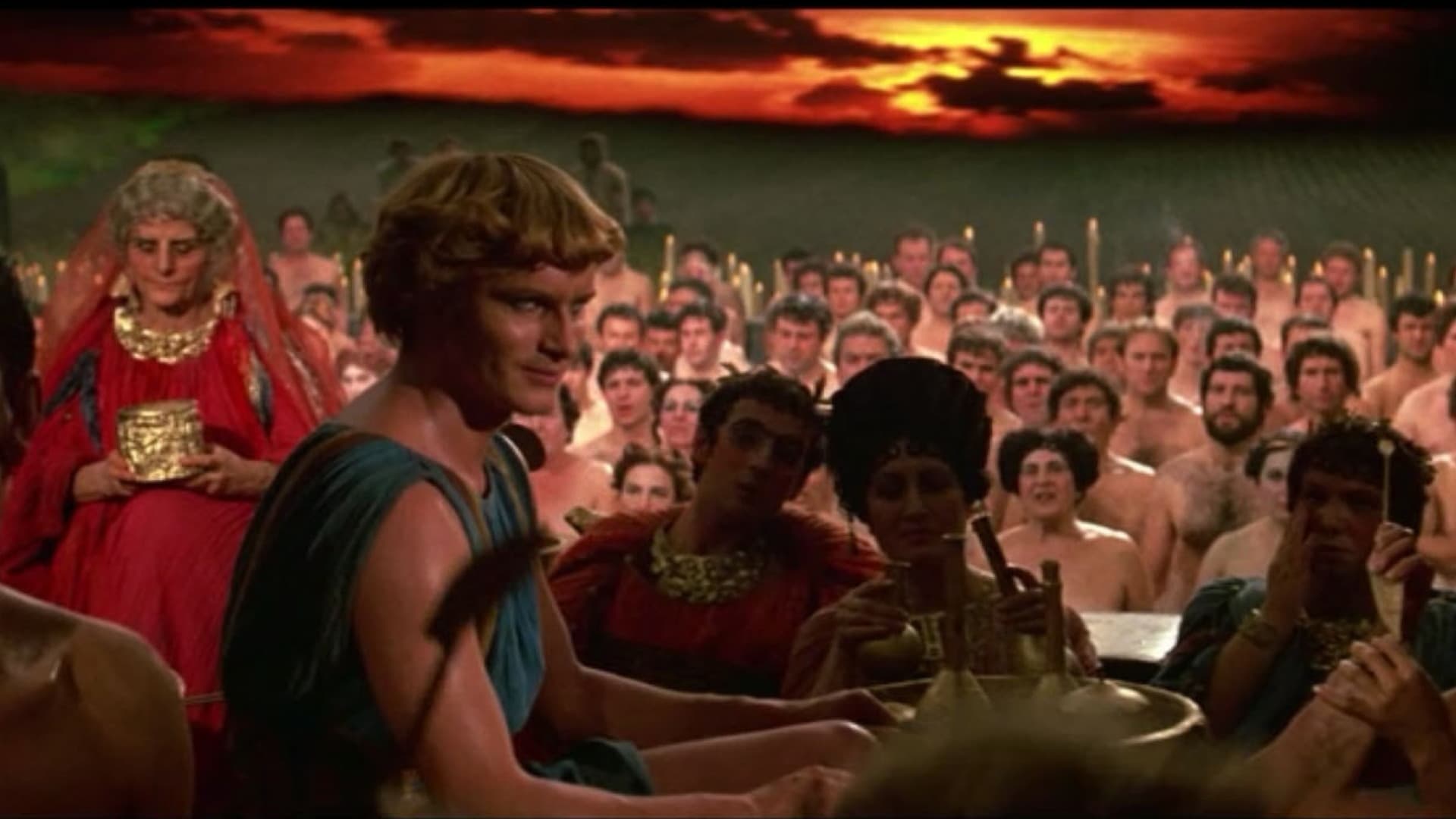
After his young lover, Gitone, leaves him for another man, Encolpio decides to kill himself, but a sudden earthquake destroys his home before he has a chance to do so. Now wandering around Rome in the time of Nero, Encolpio encounters one bizarre and surreal scene after another.

Insights

IMDb6.7/10
Rotten Tomatoes75%
Director: Federico FelliniGenres: Drama, Comedy, Fantasy

Plot Summary

In ancient Rome, two young lovers, Encolpius and Ascilto, are torn apart by circumstance and their own capricious desires. Encolpius navigates a decadent and surreal world filled with bizarre characters, encounters, and philosophical musings. The film is a fragmented and dreamlike journey through the trials and tribulations of youth in a decaying empire, marked by lust, betrayal, and the search for meaning.

Critical Reception

Federico Fellini's "Satyricon" is a visually stunning and highly stylized interpretation of Petronius' ancient Roman novel. While lauded for its audacious artistic vision and surreal imagery, it divided critics upon release, with some praising its avant-garde approach and others finding it disjointed and overly abstract. Audiences were similarly split, drawn to Fellini's unique cinematic language but sometimes alienated by its challenging narrative and explicit content.

What Reviewers Say

  • Visually audacious and dreamlike exploration of ancient Roman decadence.

  • Praised for its artistic ambition and surreal, often disturbing, imagery.

  • Criticized by some for its fragmented narrative and perceived lack of coherence.

Google audience: Audience reception on Google is not readily available for this film. However, general commentary suggests that viewers are often captivated by Fellini's unique visual style and the film's surreal atmosphere, though some find the narrative difficult to follow.

Awards & Accolades

Nominated for the Academy Award for Best Director (Federico Fellini).

Fun Fact

Federico Fellini chose not to use a complete script for "Satyricon," instead improvising much of the dialogue and action during filming, aiming to capture a dreamlike and spontaneous quality.

AI-generated overview · Verify ratings on official sources

My Review

TMDB Reviews

1 reviews
CinemaSerf

CinemaSerf

If you ever saw or read “Quo Vadis” then you will be familiar with the character of Gaius Petronius. He was one of the emperor Nero’s closest advisors and the credited author of this fantastic story of mythological excess. In this suitably ...