
Movie spotlight
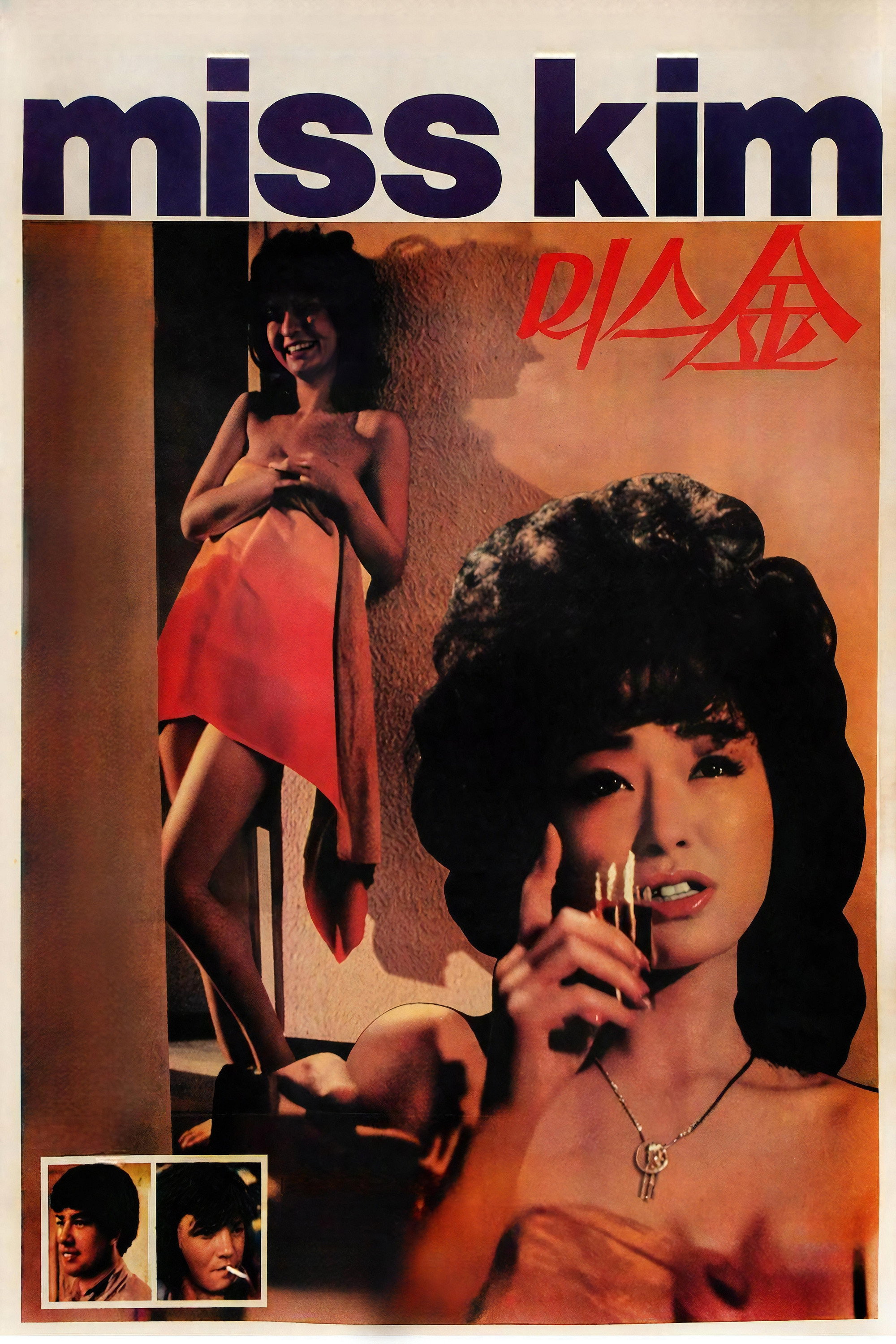
Miss Kim
Min-ae, who sets up a home in a military camp town with Seong-ho, a young man from the neighborhood, thanks to his stepmother's help, has her dream of newlyweds shattered by Seong-ho's abandonment of work and a debauched lifestyle. After seeing her meeting with Jakbu, Min-ae goes to Seoul with her daughter Gyeong-ae, and although they have a hard time, she settles down. Then Seong-ho appeared and apologized for her mistakes and asked for funds for her business. She took out a loan to provide the money, but it was a lie. Now Min-ae becomes a hostess at a salon named Miss Kim. There she meets an architect named Hyun-seok. Min-ae, who found out that Seong-ho took Gyeong-ae away from her but is in her orphanage, brings her back to live with Hyun-seok, but Seong-ho appears and tries to take Gyeong-ae away, but Seong-ho, seeing her happy family, goes back alone.
Insights
Plot Summary
The film centers on Kim Mi-sook, a young woman working in a factory who dreams of a better life. She falls for a charismatic but unreliable man, leading her down a path of difficult choices and emotional turmoil. As she navigates societal pressures and personal aspirations, she must confront the realities of her situation and fight for her own happiness.
Critical Reception
Miss Kim was a significant film in its time, praised for its realistic portrayal of working-class struggles and its strong female lead. While not a major international hit, it resonated deeply with Korean audiences and is considered a notable example of melodrama from the 1980s. Critical reviews highlighted the performances and the film's social commentary.
What Reviewers Say
Praised for its emotional depth and relatable protagonist.
Commended for its realistic depiction of societal challenges faced by women.
The film's melodrama was seen as effective in conveying its themes.
Google audience: Information on specific Google user reviews for 'Miss Kim (1985)' is not readily available.
Fun Fact
The film was part of a wave of Korean cinema in the 1980s that began to explore more complex social issues and the lives of ordinary people.
AI-generated overview · Verify ratings on official sources