
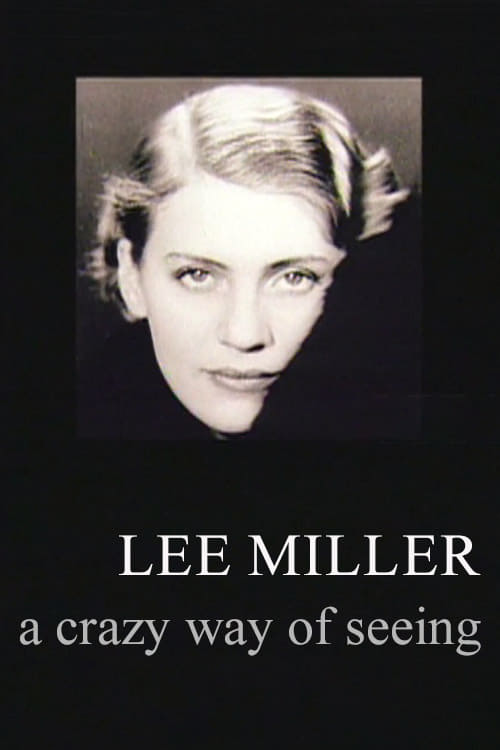
Movie spotlight
Lee Miller: A Crazy Way of Seeing
Documentary charting the fascinating life and work of Lee Miller, a model for Vogue in 1920s New York who became the only female photojournalist to cover the Second World War. Having given up photography in later life and virtually disowned her own work, Miller's extraordinary archive of 40,000 negatives was only rediscovered after her death. George Melly, David Hare, friends, colleagues and her only son, Tony Penrose, trace the story of her unconventional life through her own remarkable pictures and photographs, as well as rarely seen archive footage.
Insights
Plot Summary
This documentary explores the extraordinary life of Lee Miller, a prominent fashion model who became a pioneering Surrealist artist and a courageous war correspondent. It delves into her unique perspective on art and photography, showcasing her transition from iconic muse to acclaimed documentarian. The film highlights her experiences covering World War II, offering a powerful look at her unflinching engagement with the realities of conflict.
Critical Reception
The documentary was generally well-received for its insightful portrayal of Lee Miller's multifaceted career and life. Critics praised its comprehensive approach, blending archival footage, personal accounts, and Miller's own striking photography to create a vivid portrait. It is considered a significant work for bringing attention to an artist whose contributions were sometimes overshadowed by her famous associations.
What Reviewers Say
An in-depth and visually rich exploration of Lee Miller's remarkable life and artistic vision.
Effectively captures Miller's unique perspective as both an artist and a witness to history.
Praised for its comprehensive coverage of her evolution from model to war correspondent.
Google audience: Information on specific Google user reviews for this documentary is not readily available.
Fun Fact
Lee Miller's career as a war correspondent for Vogue magazine during World War II was highly unusual for the time, as very few women held such roles.
AI-generated overview · Verify ratings on official sources