
Movie spotlight
Juan Moreira
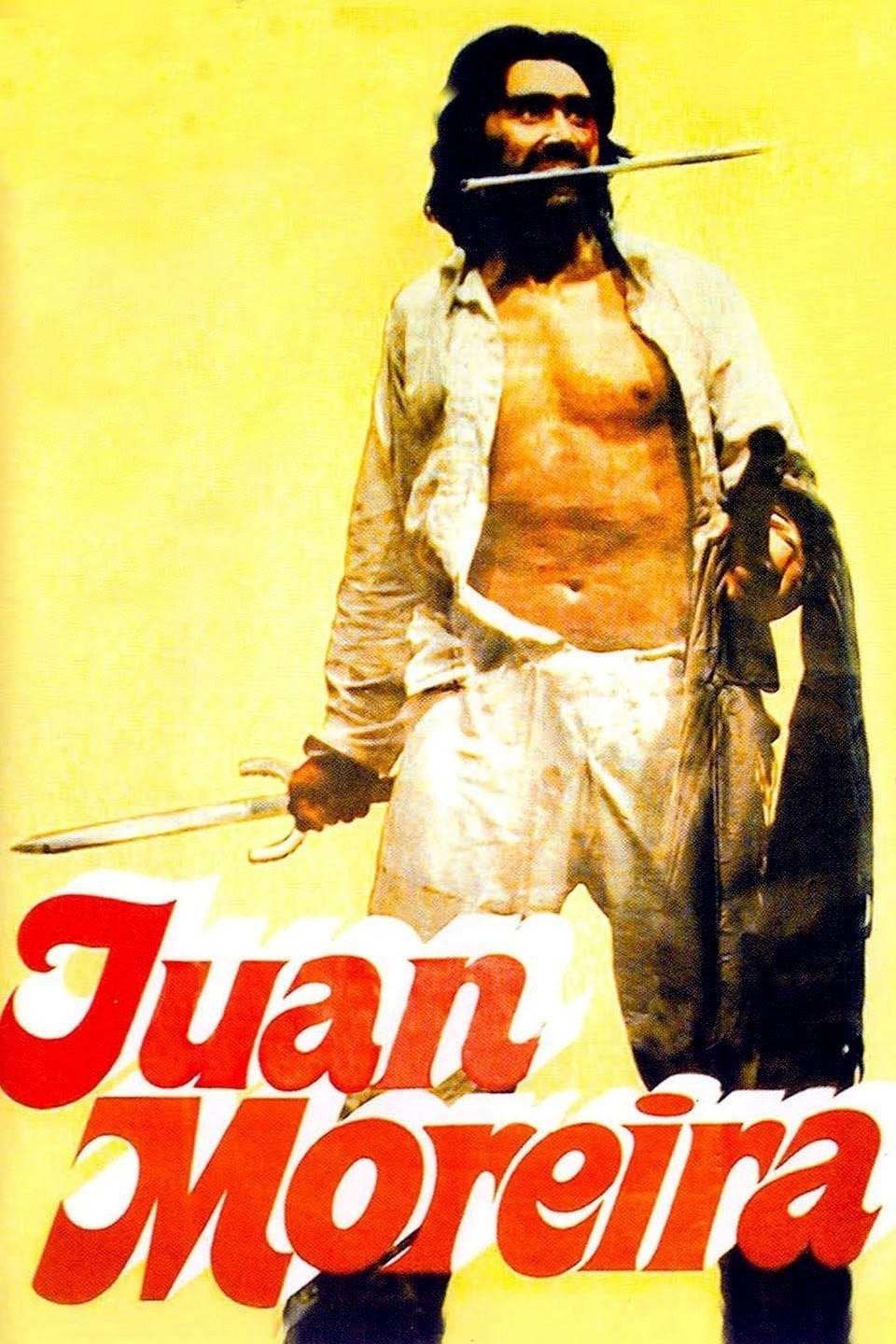
In the late nineteenth century, the mule driver Juan Moreira is a good gaucho and worker who, like many others, is subjected to abuse and humiliation by the powerful, either the police or landowners.
Insights
Plot Summary
The film chronicles the life of Juan Moreira, a gaucho who transforms from a simple countryman into a legendary outlaw and folk hero in 19th-century Argentina. Driven by injustice and betrayal, Moreira becomes a symbol of rebellion against oppressive authorities, fighting for the rights of the common people. His violent life and eventual death solidify his mythic status in Argentine popular culture.
Critical Reception
Juan Moreira is widely considered a landmark film in Argentine cinema, praised for its powerful depiction of a national myth and its gritty realism. Critics lauded Leonardo Favio's directorial vision and Rodolfo Ranni's intense performance, though some found its narrative pacing uneven. The film resonated deeply with audiences for its portrayal of social injustice and its exploration of Argentine identity.
What Reviewers Say
Praised for its epic scope and unflinching portrayal of a national hero.
Rodolfo Ranni's performance as the titular character is a highlight.
The film effectively captures the social and political climate of 19th-century Argentina.
Google audience: Audience reviews are generally positive, with many appreciating the film's historical significance and its raw depiction of a folk legend. Viewers often highlight the strong performances and the film's thematic relevance to social struggles.
Awards & Accolades
Silver Condor Award for Best Film (1974), Silver Condor Award for Best Director (Leonardo Favio, 1974), Silver Condor Award for Best Actor (Rodolfo Ranni, 1974), Silver Condor Award for Best Adapted Screenplay (Leonardo Favio, 1974).
Fun Fact
The film is based on the novel of the same name by Eduardo Gutiérrez, which itself is a fictionalized account inspired by the life of a real outlaw.
AI-generated overview · Verify ratings on official sources