
Movie spotlight
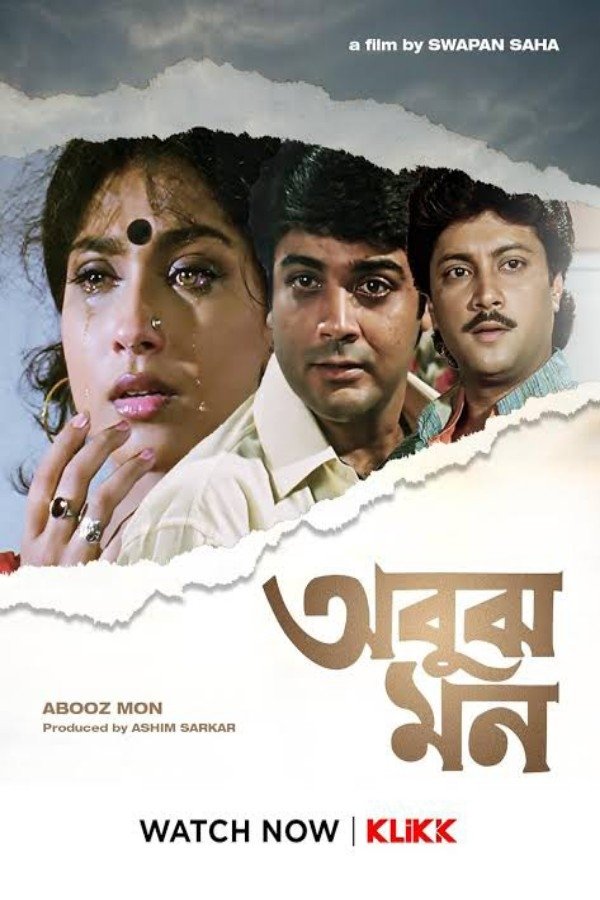
Abujh Mon
Suman and Salim are best friends. After the death of Suman's parents he lived with Salim for 7 years. Suman became a doctor and went to a village to practice his profession. In the train he met Selina who was the daughter of Rajashib, the village where Suman was going. Suman and Selina fell in love with each other but Rajashib did not accept their relationship as Suman was a Hindu and Selina a Muslim. He fixed up Selina's marriage with another groom and Suman left the village. Selina got married to Salim and on the first night she told him every thing about her love affair. Subsequently, Salim came to know that Selina and Suman loved each other. In an accident Salim became blind and Suman donated one eye to him. Finally Salim and Selina were united and Suman accepted Anjali who always loved him.
Insights
Plot Summary
The film tells the story of a woman who faces numerous challenges and societal pressures due to her emotional nature and independent spirit. She navigates complex family dynamics and personal relationships, striving to maintain her dignity and find happiness in a world that often misunderstands her. Her journey explores themes of love, sacrifice, and resilience in the face of adversity.
Critical Reception
Abujh Mon was a significant film in Bangladeshi cinema, appreciated for its strong performances, particularly from lead actress Shabana. It resonated with audiences for its portrayal of societal issues and emotional depth, though critical analysis often focused on its melodramatic elements common in films of that era.
What Reviewers Say
Praised for Shabana's powerful and nuanced performance.
The film effectively captures the emotional struggles of its protagonist.
Seen as a poignant exploration of societal expectations versus individual desires.
Google audience: Audience feedback often highlights the emotional impact of the film and the strong acting, particularly Shabana's central role. Viewers connected with the relatable struggles of the characters and the film's focus on family relationships and personal sacrifice.
Fun Fact
The film is noted for its strong female-centric narrative, a common theme in many of Shabana's most celebrated films from the 1990s.
AI-generated overview · Verify ratings on official sources