
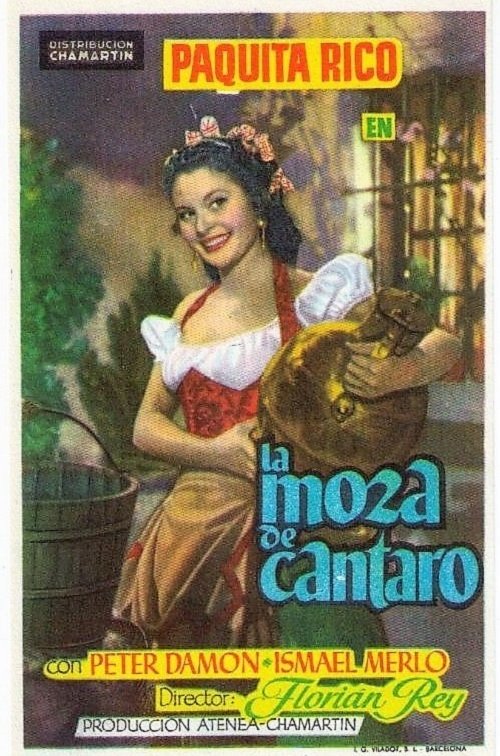
Movie spotlight
La moza de cántaro
Doña Maria de Guzman, a beautiful lady of Ronda has seen as Don Diego slapped his elderly father, disguised as a man pretending to be his brother (the expected return from Flanders) duels with him and kills him. Forced to flee, traveling in company with Don Juan, one of his fans, still hiding her gender. Unable to bear the intimacy with a soldier who believes him, leaving Don Juan and arrives in Madrid. Based on the play by Lope de Vega. The Adventures of Dona Maria de Guzman, a seventeenth-century noblewoman: served in a hostel, dressed as a man, dueled ... A life rich in experiences.
Insights
Plot Summary
Set in the heart of Andalusia, the story follows the charming and spirited Doña Leonor, who, disguised as a humble water pitcher girl, navigates the complexities of love and social standing. She uses her wit and cleverness to outsmart suitors and protect her family's honor. The narrative is filled with mistaken identities, humorous encounters, and romantic entanglements typical of classic Spanish comedies.
Critical Reception
As a classic Spanish comedy from the 1950s, 'La moza de cántaro' was generally well-received by audiences for its lighthearted entertainment, humor, and performances, particularly that of Paquita Rico. Critical reviews at the time often highlighted its faithfulness to the spirit of Lope de Vega's play and its effective comedic timing.
What Reviewers Say
Praised for its lighthearted comedic tone and romantic storyline.
Paquita Rico's performance is often cited as a highlight.
Appreciated for its faithful adaptation of classic Spanish theater.
Google audience: Audience reception for 'La moza de cántaro' is largely positive, with viewers enjoying its classic charm, humor, and romantic plot. It's often remembered as a delightful and entertaining film from a bygone era of Spanish cinema.
Fun Fact
The film is based on the 17th-century play of the same name by the renowned Spanish Golden Age playwright Lope de Vega.
AI-generated overview · Verify ratings on official sources