Movie spotlight
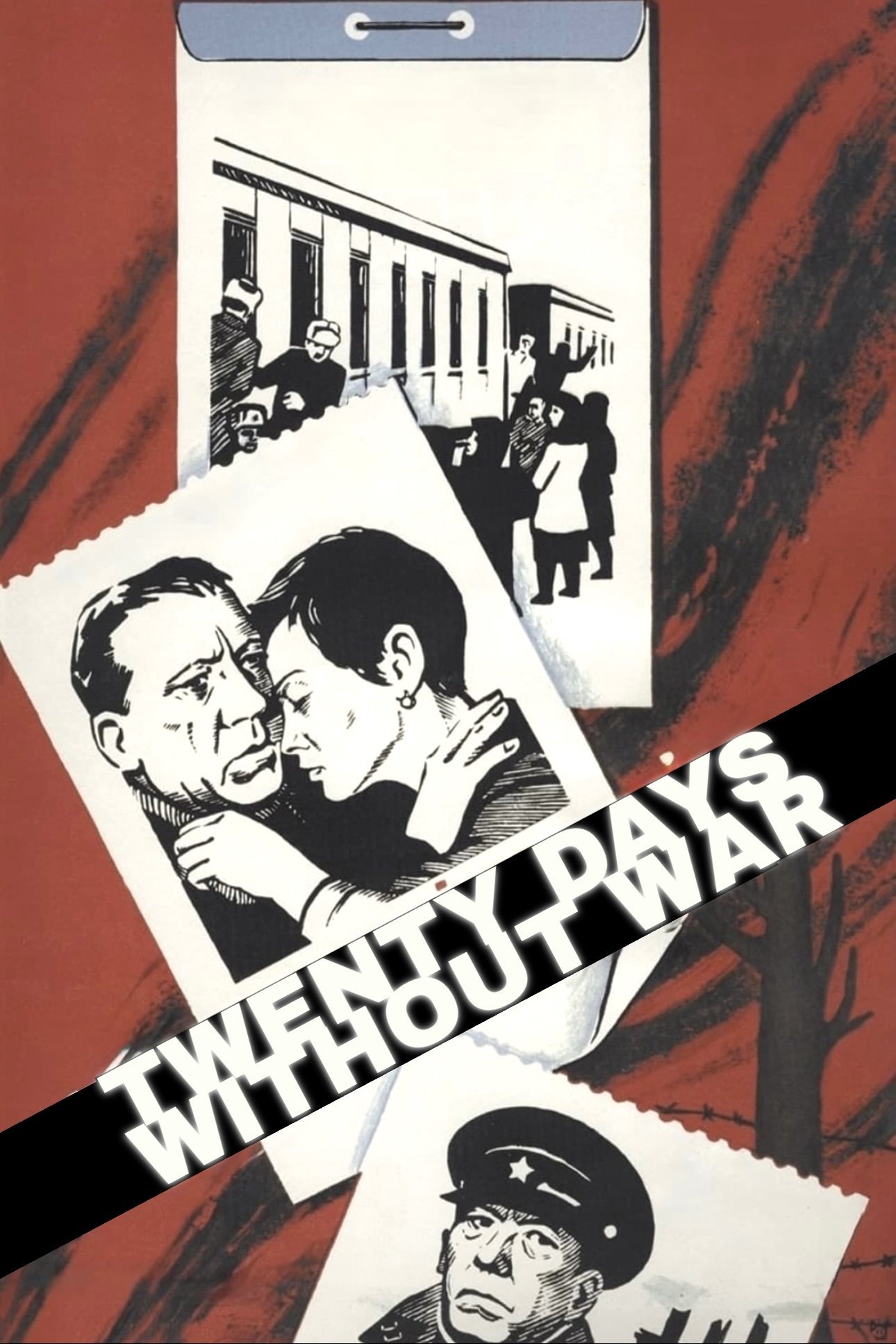
Twenty Days Without War
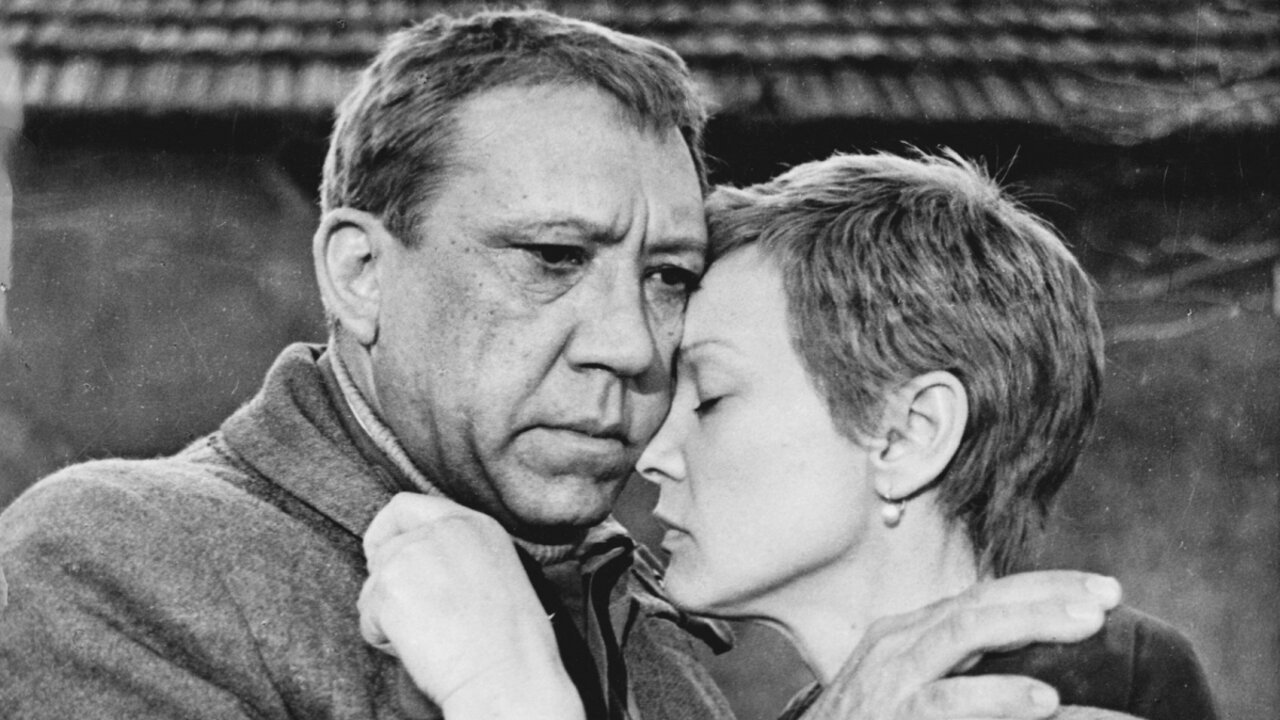
War correspondent Lopatin takes a 20-day-leave from his hard work at the front in 1942. He travels to faraway Tashkent to meet the family of the killed soldier and visit the film set of the screen adaptation of his war-time stories. Lopatin also manages to walk the streets of Tashkent, take part in a factory workers' meeting and have a short-lived love affair. Although with no bombings and fighting, the city dwellers breathe the atmosphere of the ongoing war.
Insights
Plot Summary
The film follows a Soviet journalist during World War II as he visits the front lines. He grapples with the realities of war, the propaganda surrounding it, and his own experiences and observations. The narrative explores the psychological toll of conflict and the search for truth amidst pervasive ideology.
Critical Reception
Twenty Days Without War is a highly regarded Soviet war film, praised for its realistic portrayal of wartime life and its thoughtful exploration of moral and psychological complexities. Critics often highlight its stark visual style and the nuanced performances of its cast, noting its departure from more overtly patriotic war films.
What Reviewers Say
Praised for its unflinching realism and psychological depth.
Noted for its stark, authentic portrayal of the Eastern Front.
Applauded for its nuanced characters and subtle critique of wartime propaganda.
Google audience: Information on Google user reviews is not readily available for this film.
Fun Fact
Alexei German, the director, was known for his meticulous and often lengthy filmmaking process, and 'Twenty Days Without War' is considered a significant work in his distinctive style.
AI-generated overview · Verify ratings on official sources