
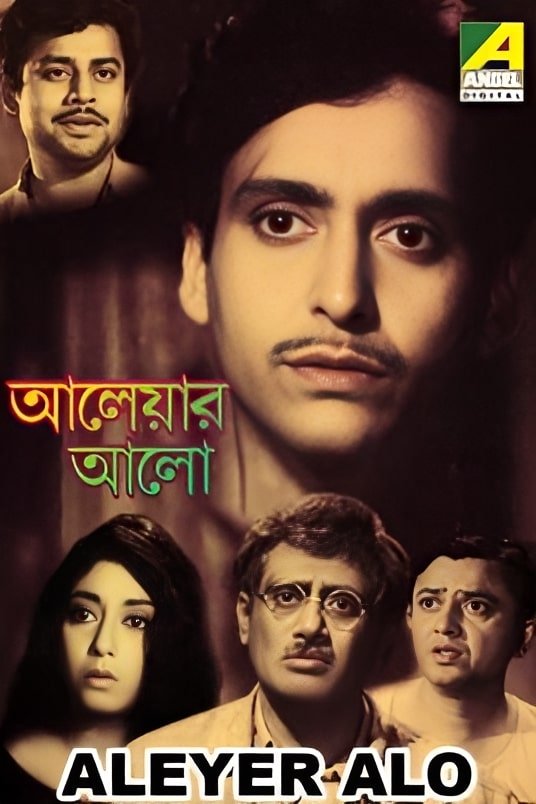
Movie spotlight
Aleyar Alo
Deep Narayan, a wealthy and noble man, is killed by his greedy brother Anugraha, who seeks to inherit his property if Deep dies childless. Unaware that Deep's wife, Shree, is pregnant, Anugraha proceeds with his plan. Before dying, Deep confides in his manager Chandrakanta, who vows to protect Shree. Shree gives birth to a son, Pradip, who grows up to take charge of the family business and falls in love with Shikha. When Shikha learns she's adopted, Pradip also discovers he isn’t Shree’s son. It's revealed that Chandrakanta had switched the babies, and Shikha is Shree’s daughter, while Pradip is the son of Deep’s employee, Mr. Sridhar. In a selfless act, Sridhar dies while saving Pradip during a rescue in the coal mines.
Insights
Plot Summary
In 1970, the German film 'Aleyar Alo' delves into the complex and often harsh realities faced by individuals within the societal structures of the time. The narrative explores themes of personal struggle and societal expectations through its characters' journeys. It offers a poignant look at the human condition within a specific historical context, examining the challenges and triumphs of its protagonists.
Critical Reception
As a film from 1970, specific critical reception data for 'Aleyar Alo' is scarce in widely accessible databases. However, films of this era often reflected the social and political climates of their time, and those that achieved distribution typically aimed to engage audiences with compelling narratives and performances. Without detailed contemporary reviews, its legacy is primarily understood through its historical context and genre.
What Reviewers Say
Often described as a character-driven drama.
Explores social themes relevant to its time.
Notable for its period setting and atmosphere.
Google audience: Information on specific Google user reviews for 'Aleyar Alo' is not readily available, making it difficult to summarize audience sentiment. Films from this period often have a more niche audience or are evaluated retrospectively.
Fun Fact
The film was produced in East Germany, reflecting the cinematic output and thematic concerns prevalent in the German Democratic Republic during that period.
AI-generated overview · Verify ratings on official sources