
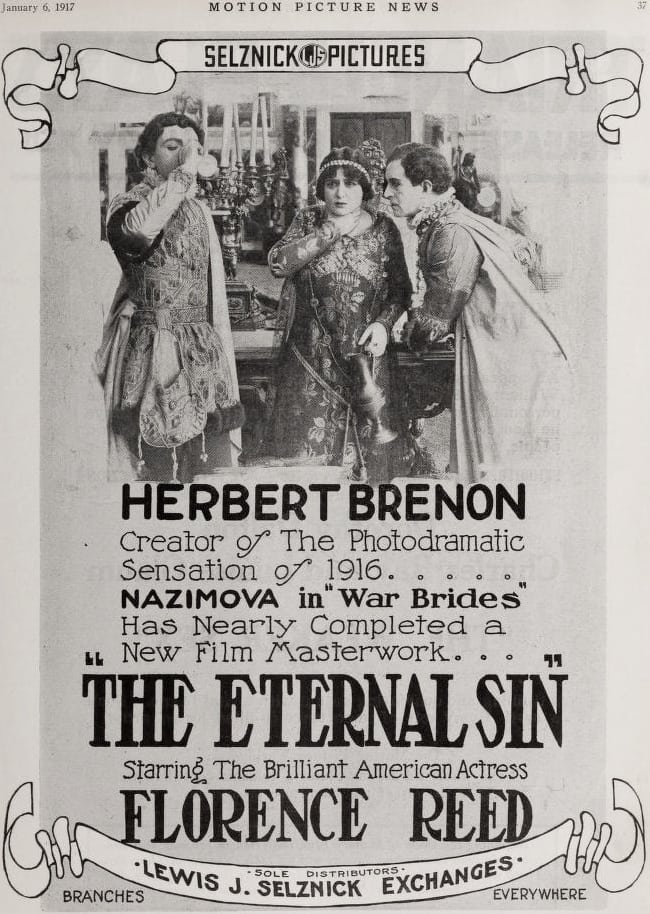
Movie spotlight
The Eternal Sin
Gennaro, the son of Lucretia Borgia, lives unaware of the identity of his mother, who has married the Duke of Ferrara. After Lucretia's brother is killed by five conspirators, the fathers of Gennaro's dearest friends, Lucretia tortures the old men to death. Later, Gennaro and his companions journey to Lucretia's domain, and she sees her son for the first time. The Duke, who believes him to be her lover, poisons him, but Lucretia administers the antidote in time and saves his life. Then she schemes to poison her sons' five friends for their fathers' mistake.
Insights
Plot Summary
The film tells the story of a woman who enters a life of sin to support her family. She navigates a corrupt world, facing moral dilemmas and personal sacrifices. Ultimately, her journey explores themes of redemption and the consequences of societal pressures.
Critical Reception
As a silent film from 1917, contemporary critical reception is not readily available in a consolidated format. However, Valeska Suratt was a well-known star of her time, and her films were generally popular with audiences, often focusing on melodrama and sensational themes.
What Reviewers Say
Early silent films often relied on strong melodramatic performances.
The film likely explored themes of societal corruption and individual struggle.
Visual storytelling and expressive acting were paramount in this era.
Google audience: Information on Google user reviews for films of this age is not available.
Fun Fact
Valeska Suratt was one of the highest-paid actresses in America in the early 1910s, known for her striking fashion and dramatic roles, often referred to as 'the Gibson Girl in motion'.
AI-generated overview · Verify ratings on official sources