
Movie spotlight
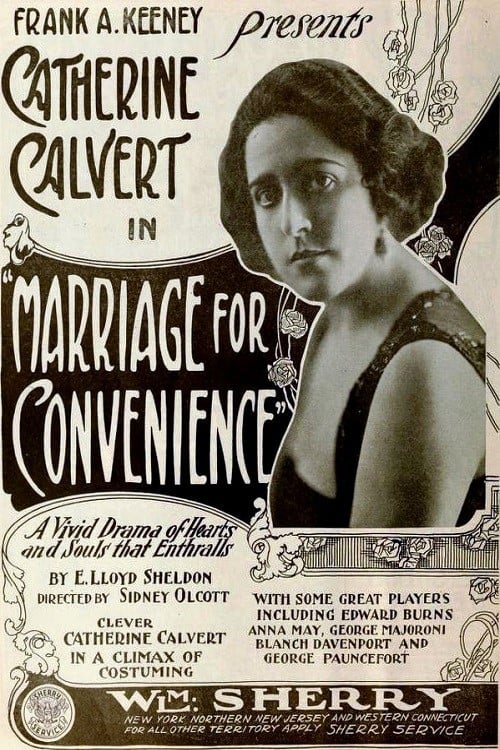
Marriage for Convenience
Barbara Rand is blinded when she leaps through a window to escape an assailant. Her sister, Natalie, reluctantly abandons her fiancé, Ned Gardiner, and marries Oliver Landis, who can provide the money needed for Barbara's operation. Unaware that Oliver was Barbara's attacker, Natalie blames his business partner, Howard Pollard, who was with Barbara on the night she was injured. Natalie holds Howard at gunpoint, but when her husband arrives, he promises to deal with the villain making sure Howard falls to his death. Upon Barbara’s release from the hospital, Oliver tries to blind her once. Natalie threatens him with a pistol, but Oliver wrests it away from her. He then realizes that he can no longer hide his guilt from Natalie or the police and shoots himself. Barbara has been avenged, and Natalie is free to marry Ned.
Insights
Plot Summary
This silent comedy follows the misadventures of a young man who enters into a marriage of convenience. He hopes to secure his financial future and avoid romantic entanglements, but finds himself unexpectedly falling for his new wife. Comedic situations arise as he tries to navigate his burgeoning feelings while maintaining the pretense of their platonic arrangement.
Critical Reception
As a silent film from 1919, contemporary critical reception is scarce and difficult to verify through modern databases. However, films of this era from similar studios and directors were generally produced for mass entertainment, often featuring lighthearted plots and comedic performances. Audience reception would have been based on the communal viewing experience in theaters.
What Reviewers Say
Likely appreciated for its light comedic tone and romantic elements.
Silent film era comedies often relied on physical humor and clear narrative arcs.
May have been seen as a pleasant diversion for audiences of the time.
Google audience: Information on Google user reviews for a silent film from 1919 is not available.
Fun Fact
Silent films often utilized title cards to convey dialogue and narrative exposition, which would have been crucial for understanding the plot of 'Marriage for Convenience'.
AI-generated overview · Verify ratings on official sources