Movie spotlight
The Kid from Spain
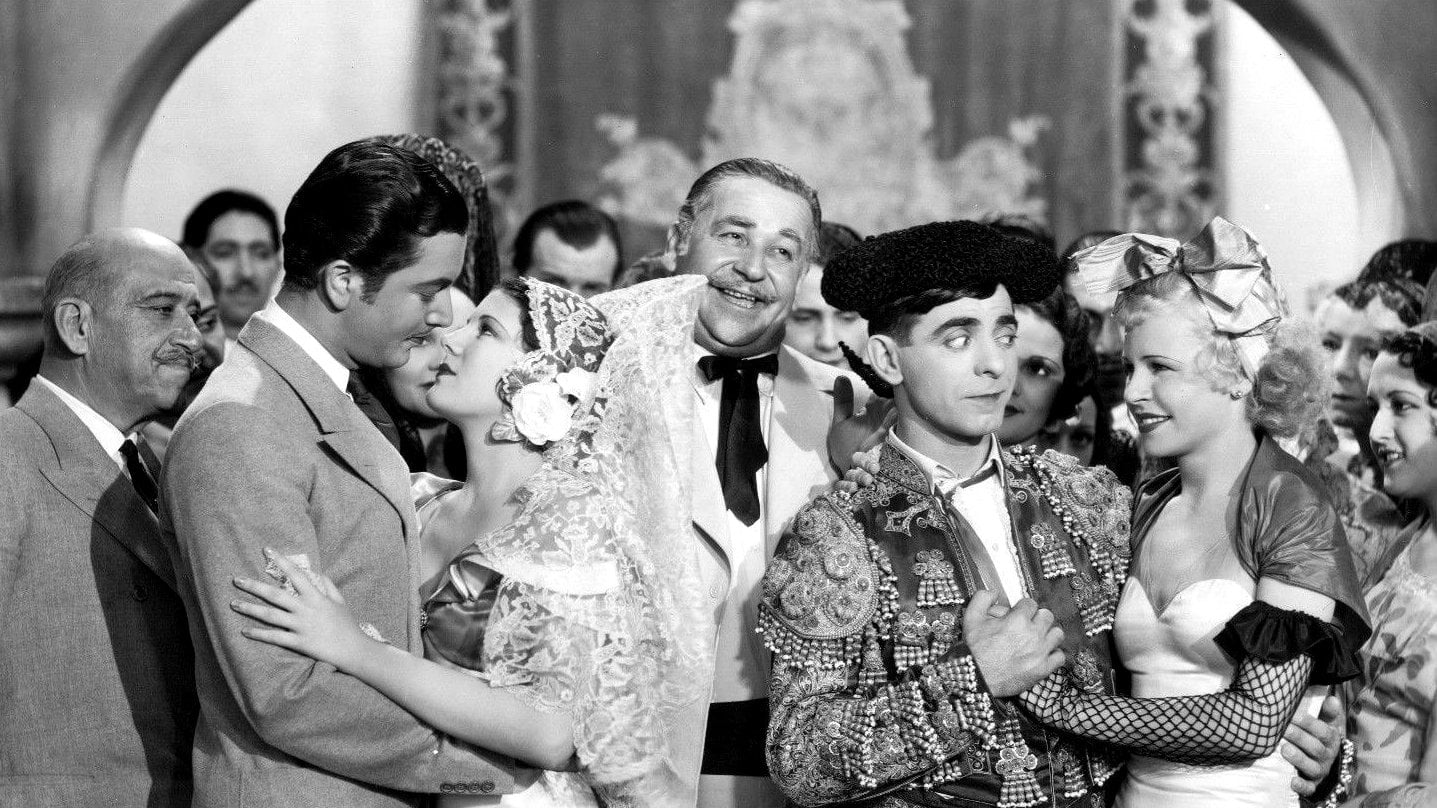
Eddie and his Mexican friend Ricardo are expelled from college after Ricardo put Eddie in the girl's dormitory when he was drunk. Per chance Eddie gets mixed up in a bank robbery and is forced to drive the robbers to safety. To get rid of him they force him to leave the USA for Mexico, but a cop is following him. Eddie meets Ricardo there, Ricardo helps him avoid being arrested by the cop when he introduces Eddie as the great Spanish bullfighter Don Sebastian II. The problem is, the cop is still curious and has tickets for the bullfight. Eddie's situation becomes more critical, when he tries to help Ricardo to win the girl he loves, but she's engaged to a "real" Mexican, who is, unknown to her father, involved in illegal business. While trying to avoid all this trouble, Eddie himself falls in love with his friend's girl friend's sister Rosalie, who also want to see the great Don Sebastian II to kill the bull in the arena.
Insights
Plot Summary
Eddie Cantor plays Eddie, a shy young man who prefers feminine company to football. When his mother insists he attend college and play football, he attempts to lead a double life, sneaking away from his studies to attend parties and spend time with his love interests. His antics lead to a series of comedic mishaps and misunderstandings on and off the football field, as he tries to maintain the illusion of being a star athlete.
Critical Reception
The Kid from Spain was a commercial success, capitalizing on the popularity of Eddie Cantor and the musical numbers. While praised for its energetic performances and lavish production, its plot is considered thin and typical of the era's musical comedies. It is remembered for its Technicolor sequences and Cantor's signature musical numbers.
What Reviewers Say
Eddie Cantor's comedic talent and musical numbers are the primary draw.
The film is a lively, if predictable, musical comedy from the early sound era.
Visually, the film is notable for its early use of Technicolor sequences.
Google audience: Audience reviews from the era and modern viewers often highlight Eddie Cantor's effervescent performance and the entertainment value of the musical sequences. The humor is generally considered dated by contemporary standards, but Cantor's charisma and the film's energetic pace keep it watchable for fans of classic musicals.
Fun Fact
The film is notable for its early use of three-strip Technicolor for its musical numbers, which would become more common in Hollywood musicals later in the decade.
AI-generated overview · Verify ratings on official sources