
Movie spotlight
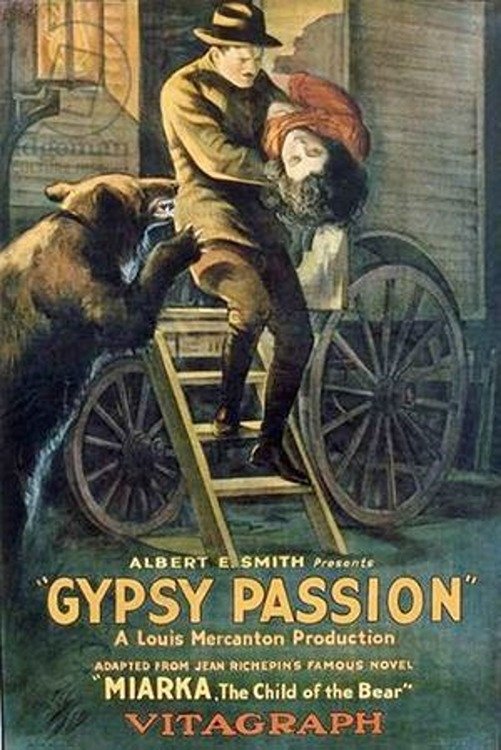
Miarka, la fille à l'ourse
Miarka is to marry a gypsy chief - whereabouts unknown. She and her tame bear live upon the estate of an old gentleman who tolerates them because of his interest in gypsies, and more particularly because he has a gypsy document which he cannot decipher. One day, the gardener, who is in love with Miarka, robs the master and sets fire to the home, making it appear that she is the guilty one.
Insights
Plot Summary
The story follows Miarka, a young Romani girl living with her grandmother and their trained bear in the French countryside. Her life is intertwined with the local villagers, particularly a young man named Luc. The narrative explores themes of love, prejudice, and the challenges faced by those living on the fringes of society.
Critical Reception
As an early silent film from a prolific director, 'Miarka, la fille à l'ourse' is primarily of historical interest for its portrayal of Romani life and its place in early French cinema. Contemporary reviews focused on its melodramatic elements and visual storytelling. Modern reception acknowledges its documentary-like qualities and its place in Louis Feuillade's extensive filmography.
What Reviewers Say
Praised for its ethnographic depiction of Romani culture for its time.
Noted for its simple, albeit melodramatic, narrative structure.
Appreciated for Louis Feuillade's characteristic visual style and pacing.
Google audience: Information on Google user reviews for this early silent film is not readily available.
Fun Fact
Louis Feuillade, the director, was known for his prolific output and his pioneering work in serial films, with 'Miarka, la fille à l'ourse' being one of his many ventures into different narrative styles and subjects.
AI-generated overview · Verify ratings on official sources