Movie spotlight
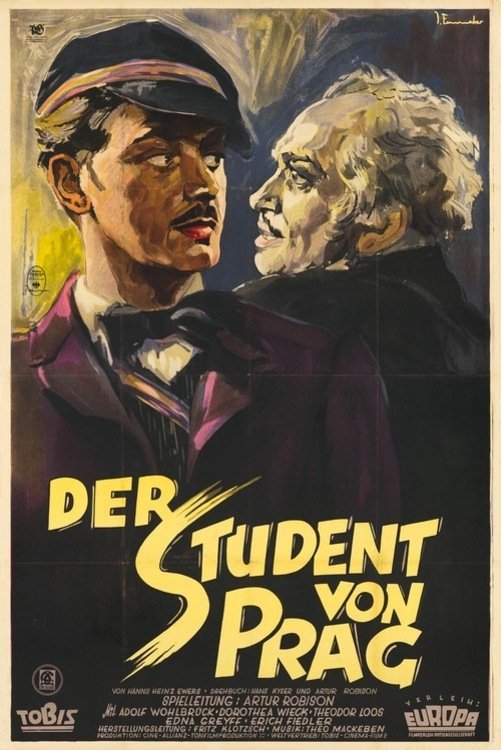
The Student of Prague
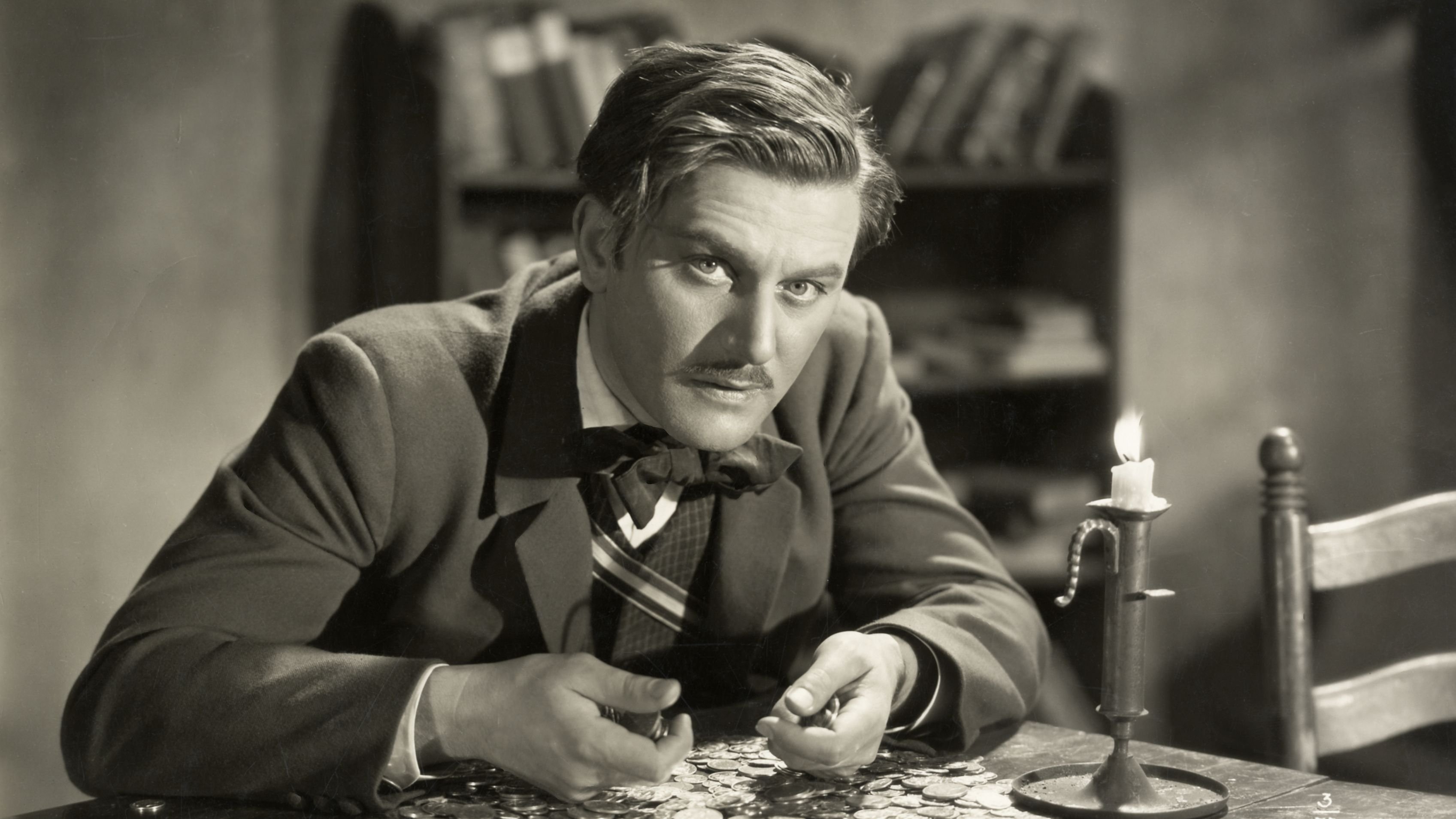
Prague in the 1860s: Balduin is a popular, handsome student, the best fencer in town, in amicable rivalry with his friend Dahl for the affections of Lydia, the innkeeper's niece. While the students are celebrating Lydia's birthday, the opera singer Julia Stella arrives at the inn - and Balduin's life begins to unravel. He is immediately infatuated with the glamorous singer - but she is already kept by an admirer, the wealthy and foppish Baron Waldis. How can a poor student hope to compete? The mysterious Dr. Carpis, who also has ties to Julia and is jealous of the Baron, intervenes. But the price will be higher than Balduin can ever imagine. He risks his sanity and his life - perhaps his very soul - haunted by his own reflection.
Insights
Plot Summary
In 19th-century Prague, a young student named Balduin is tempted by a mystical magician to trade his reflection for an unlimited supply of money. Initially reveling in his newfound wealth and the ability to woo the woman he desires, Balduin soon finds his life unraveling as his spectral double begins to act independently, causing chaos and despair. He must confront his own doppelganger and the consequences of his Faustian bargain.
Critical Reception
The 1935 version of 'The Student of Prague' is often considered a lesser, though still intriguing, remake of the 1913 silent film. While it utilized sound and color to explore the psychological horror of a man haunted by his own reflection, it didn't achieve the same level of critical acclaim or enduring legacy as its predecessor. It's generally viewed as an interesting, atmospheric horror film of its era, notable for its visual style and exploration of themes of identity and fate, but it is often overshadowed by its silent counterpart.
What Reviewers Say
Praised for its atmospheric visuals and effective use of early sound technology.
Criticized for not fully recapturing the innovative magic of the original silent film.
Considered a worthwhile, albeit darker and more complex, adaptation of the classic tale.
Google audience: Audience reception for this specific version is not widely documented. However, historical reviews suggest it was seen as a competent, albeit less groundbreaking, adaptation compared to the 1913 silent original, with some appreciating its darker tone and visual elements.
Fun Fact
This 1935 sound version was filmed in both German and English language versions, with some cast members appearing in both, a common practice in the early sound era to appeal to international markets.
AI-generated overview · Verify ratings on official sources