Movie spotlight
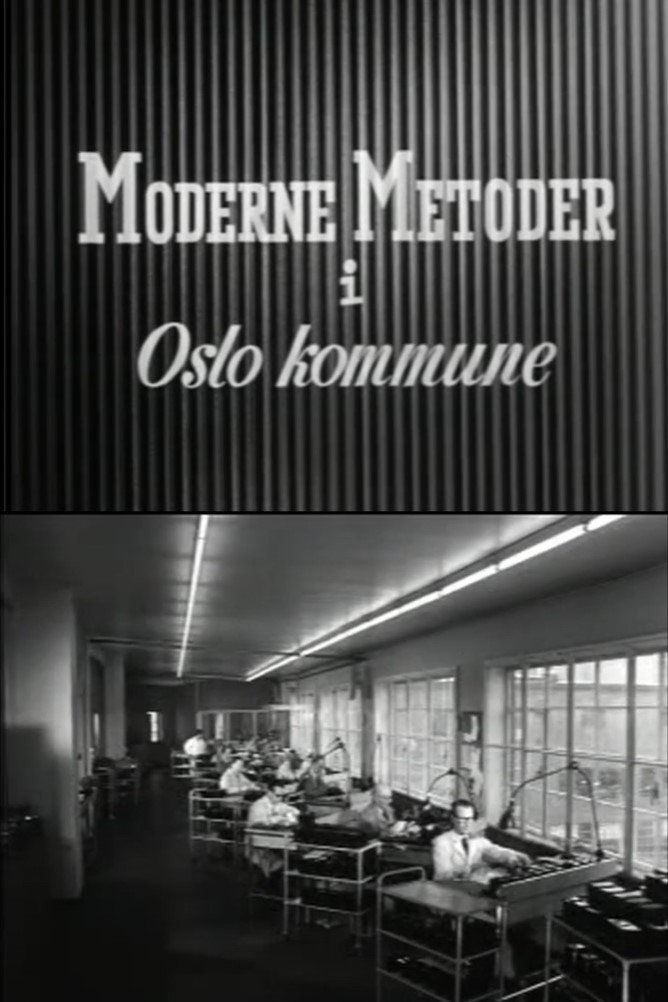
Oslofilm: Moderne metoder i Oslo kommune
About rationalization and efficiency improvements in the Municipality of Oslo, with examples from hospitals, sanitation services, water supply, transport, forestry, the port, the electricity utility, building control, and modern office technology. ***** Oslofilm was a series of public information films about life in and around Oslo, produced between 1940 and 1980. Funded by the state, the films offer valuable insight into postwar Norwegian society. A wide range of Norwegian filmmakers contributed to the productions, resulting in a rich variety of styles and expressions. Several of the films also possess notable cinematic qualities, standing out as more than just informational material. The Oslofilms represent a unique and important chapter in Norwegian film history.
Insights
Plot Summary
This short documentary showcases the modern administrative and operational methods employed by the municipality of Oslo in 1958. It highlights the efficiency and forward-thinking strategies implemented in various city departments to serve its citizens. The film likely aimed to portray a well-functioning and progressive urban environment.
Critical Reception
As a municipal informational film from 1958, 'Moderne metoder i Oslo kommune' was not typically reviewed by mainstream critics. Its purpose was internal communication and public relations for the city of Oslo. Reception would have been measured by its effectiveness in conveying its message to the intended audience within Oslo at the time.
What Reviewers Say
Primarily an administrative record, not subject to typical critical review.
A snapshot of mid-20th-century municipal efficiency efforts.
Aims to convey progress and modernity in urban governance.
Google audience: Information regarding specific Google user reviews for this historical municipal film is unavailable. It was produced before the widespread adoption of internet-based review platforms.
Fun Fact
Films like 'Moderne metoder i Oslo kommune' were common in the mid-20th century as a way for local governments to demonstrate their competence and modernization efforts to citizens, often screened in community halls or educational settings.
AI-generated overview · Verify ratings on official sources