Movie spotlight
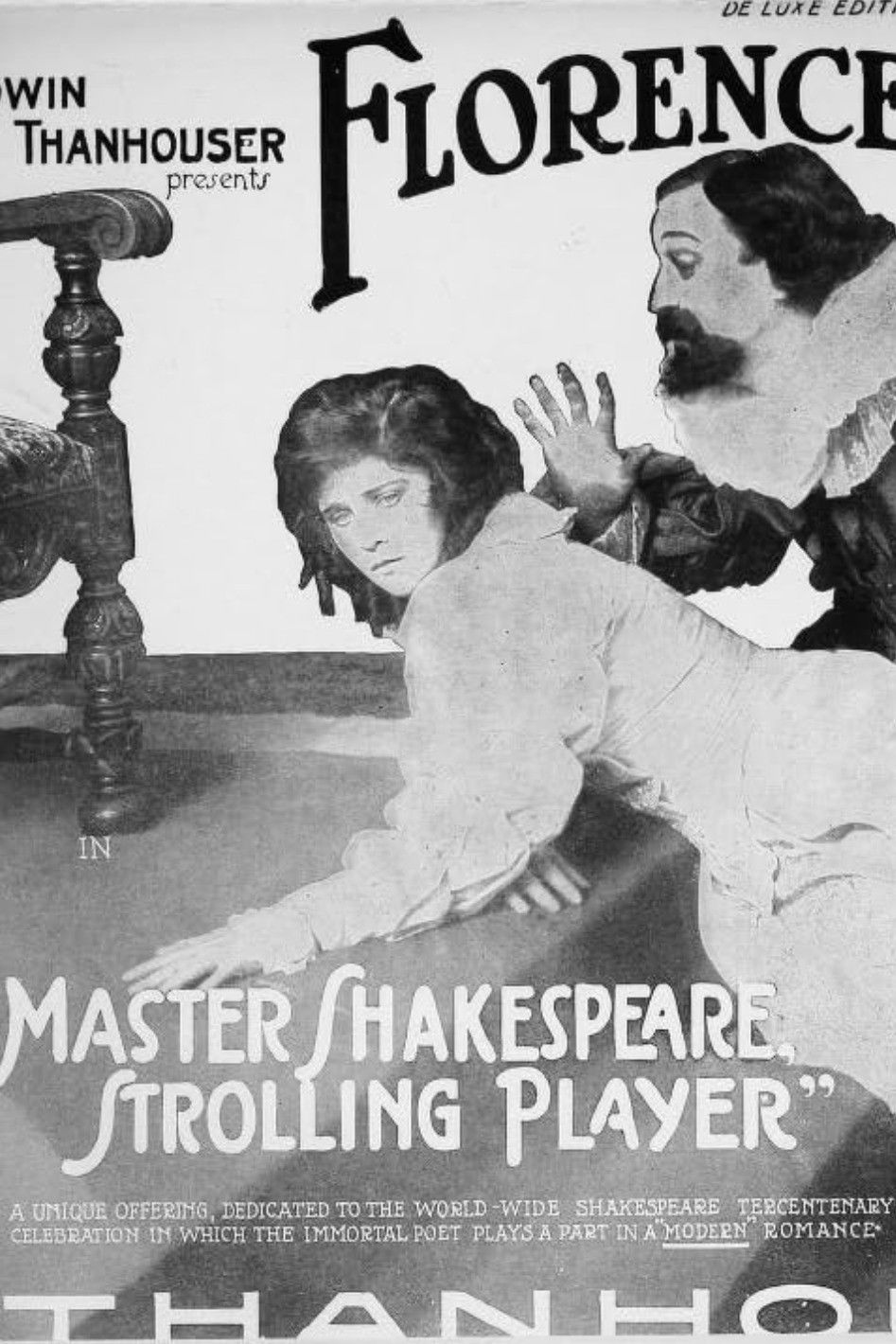
Master Shakespeare, Strolling Player
Unable to agree on the man responsible for the plays commonly attributed to William Shakespeare, Miss Gray, who favors Francis Bacon, and Lieutenant Stanton, who accepts Shakespeare as the author, break off their engagement. Stanton then arranges to be transferred to the Mexican border, and while fighting there is badly wounded. When she hears the news about Stanton's condition, Miss Gray faints, and then dreams that she has been transported to Elizabethan times. Then, after Bacon falls in love with her, she discovers his obsessive jealousy of Shakespeare, and learns that he has bribed a courtier to accuse him of stealing Bacon's plays. As a result, when Miss Gray wakes up, she realizes that she has championed the wrong poet, and so she immediately is reconciled with Stanton, who soon recovers from his wound.
Insights
Plot Summary
This silent short film is believed to offer a dramatized glimpse into the life of William Shakespeare, portraying him as a traveling actor. It likely focuses on his experiences on the road and his dedication to the performing arts during his era. The narrative would have been conveyed through visual storytelling and intertitles, common for the period.
Critical Reception
As a silent short film from 1916, specific critical reception details for 'Master Shakespeare, Strolling Player' are not readily available in modern databases. Films of this era, especially shorts, often received localized or ephemeral reviews that have not been widely preserved. Its primary historical significance lies in its early attempt to dramatize the life of a renowned historical figure.
What Reviewers Say
Limited information exists to form a consensus.
Likely appreciated for its biographical subject matter during its time.
As a historical artifact, its value is in its early portrayal of Shakespeare.
Google audience: Audience reviews for this film are not available due to its age and limited distribution.
Fun Fact
Being a silent film from 1916, 'Master Shakespeare, Strolling Player' would have relied entirely on visual storytelling and intertitles, with no spoken dialogue, reflecting the cinematic conventions of its time.
AI-generated overview · Verify ratings on official sources