Movie spotlight
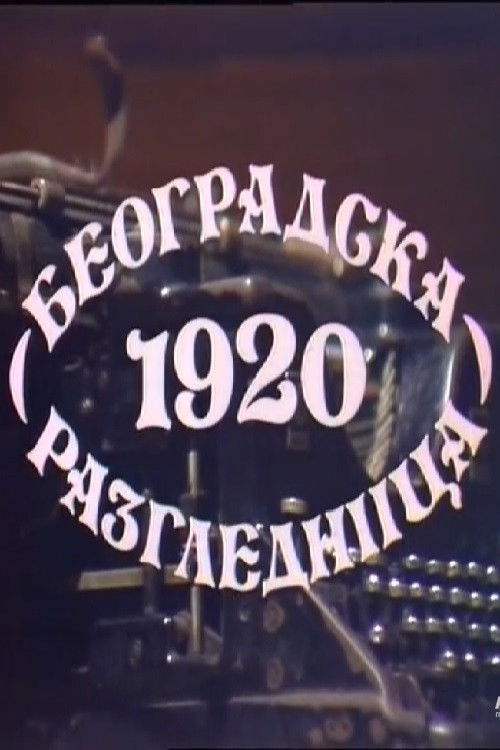
Belgrade Postcard of 1920
Young journalist Nenad Bajkic works in the editorial office of the newspaper “Press”, managed by Despotovic. Bajkic suspects that Despotovic killed his father and wants to expose him. In 1920, “Press” became the center of increasingly complex intrigues.
Insights
Plot Summary
This film offers a glimpse into Belgrade in 1920, showcasing the lives of its inhabitants in the aftermath of World War I. It depicts the social and political climate of the era, focusing on the struggles and aspirations of ordinary people attempting to rebuild their lives and the city. The narrative weaves together personal stories against the backdrop of a changing society.
Critical Reception
While specific widespread critical reception data for 'Belgrade Postcard of 1920' is not readily available in English-language databases, Serbian film historians generally recognize it as a significant work in Živojin Pavlović's filmography, praised for its historical insight and realistic portrayal of post-war Belgrade.
What Reviewers Say
Praised for its authentic depiction of a specific historical period in Belgrade.
Appreciated for its focus on the human element amidst societal transition.
Noted for its atmospheric portrayal of post-WWI Serbian life.
Google audience: Audience reviews for this film are primarily available in Serbian. General sentiment suggests appreciation for its historical value and its authentic, unvarnished look at Belgrade in the 1920s, often highlighting its nostalgic and melancholic tone.
Awards & Accolades
None notable in international databases, though likely recognized within Yugoslavian film circles.
Fun Fact
The film is part of a larger body of work by Živojin Pavlović that frequently explored Yugoslavian history and society, often with a critical lens.
AI-generated overview · Verify ratings on official sources