Insights
Plot Summary
The opera tells the story of the Israelites' captivity in Babylon under King Nebuchadnezzar II. It explores themes of oppression, faith, and the struggle for freedom. The famous "Chorus of the Hebrew Slaves" is a central piece, expressing the longing for homeland and liberty.
Critical Reception
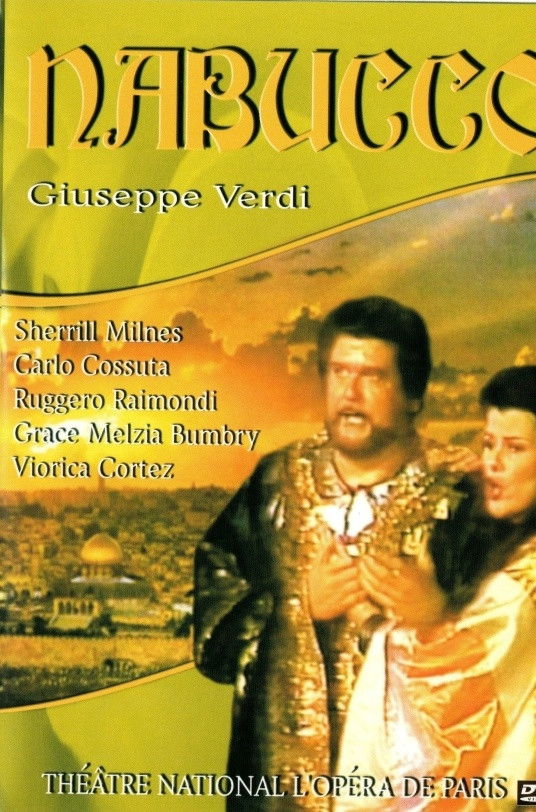
This 1979 production of Verdi's 'Nabucco' is generally well-regarded for its strong vocal performances and adherence to the operatic tradition. While perhaps not as groundbreaking as some later interpretations, it is appreciated for its fidelity to the original work and the powerful delivery of its iconic choruses. The staging is often noted as traditional, focusing on the dramatic intensity of the music.
What Reviewers Say
Praised for the powerful vocal performances, particularly from the lead singers.
The rendition of the famous 'Chorus of the Hebrew Slaves' is frequently highlighted for its emotional impact.
Noted for its traditional staging and faithfulness to Verdi's original composition.
Google audience: Information on specific Google user reviews for this 1979 production is not readily available.
Fun Fact
Giuseppe Verdi composed 'Nabucco' early in his career, and its premiere in 1842 is often considered the start of his international fame. The opera's themes of nationalistic struggle resonated strongly with the Italian public during the Risorgimento.
AI-generated overview · Verify ratings on official sources