
Movie spotlight
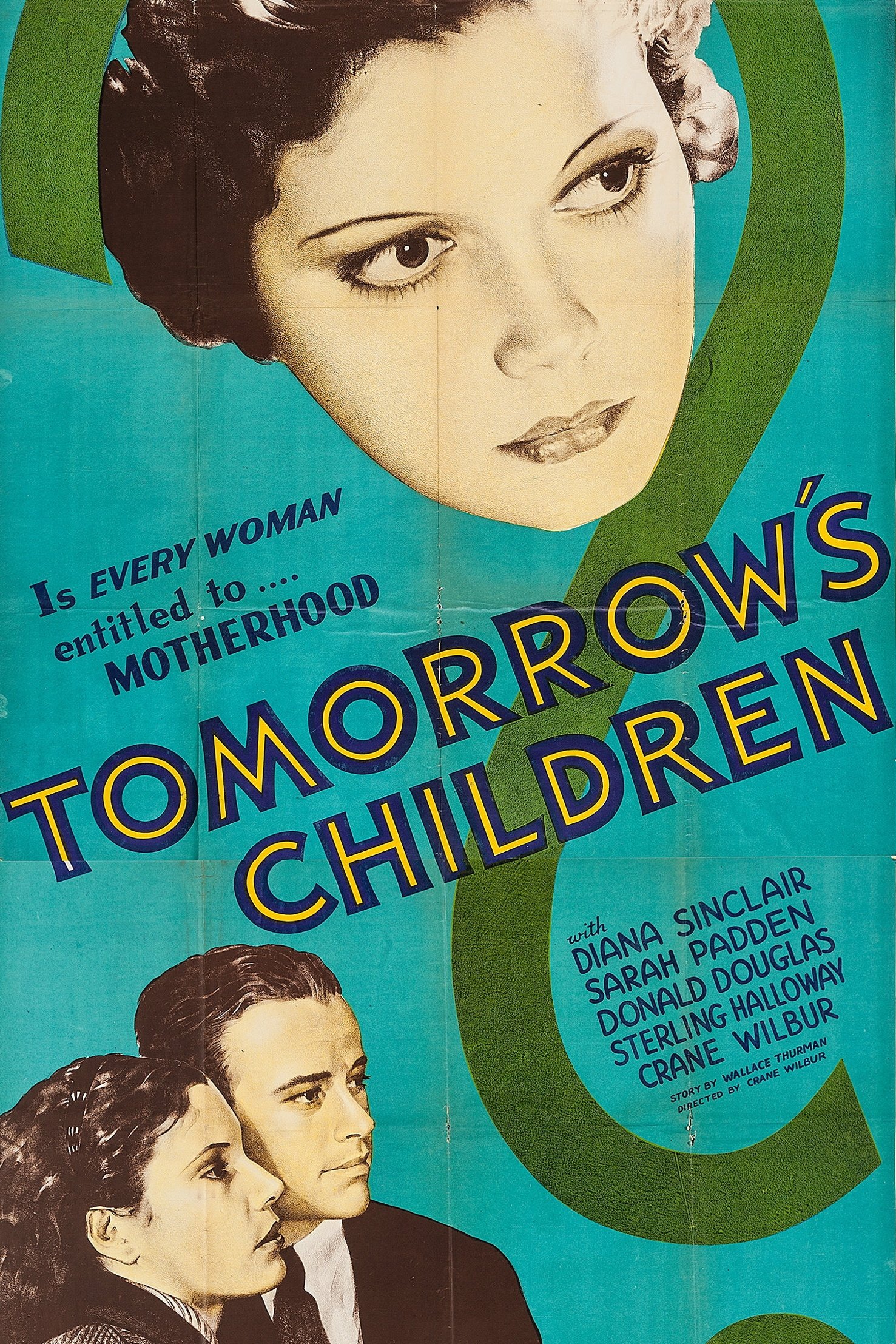
Tomorrow's Children
Young Alice Mason wishes to start a family, but because her own has been deemed "defective" by the state health authorities—her parents are lazy alcoholics who continue breeding, and her siblings are disabled, have mental problems or are imprisoned—she is ordered by a court to undergo sterilization so that her family's "defective genes" won't be passed on to any further. Her boyfriend Jim and a kindly priest search desperately for a way to stop the forced surgery before it's too late.
Insights
Plot Summary
In this cautionary tale, a scientist discovers a method to artificially inseminate women, leading to a society where reproduction is controlled by the state. A young couple defies the system, seeking to have a child naturally, which puts them in direct conflict with the totalitarian regime.
Critical Reception
As an early science fiction film with a heavy dose of social commentary, 'Tomorrow's Children' was noted for its prescient themes regarding reproductive control and societal engineering. While not a major critical success in its time, its provocative ideas have been revisited by film historians.
What Reviewers Say
Praised for its ambitious and forward-thinking themes.
Criticized for its somewhat dated production values.
Noted for its controversial exploration of eugenics and state control.
Google audience: Information on Google user reviews for this film from 1934 is not available.
Fun Fact
Despite its limited distribution and recognition, 'Tomorrow's Children' is considered a precursor to later films that explored dystopian societies and government control over reproduction, such as 'Brave New World' and 'Gattaca'.
AI-generated overview · Verify ratings on official sources