
Penelope
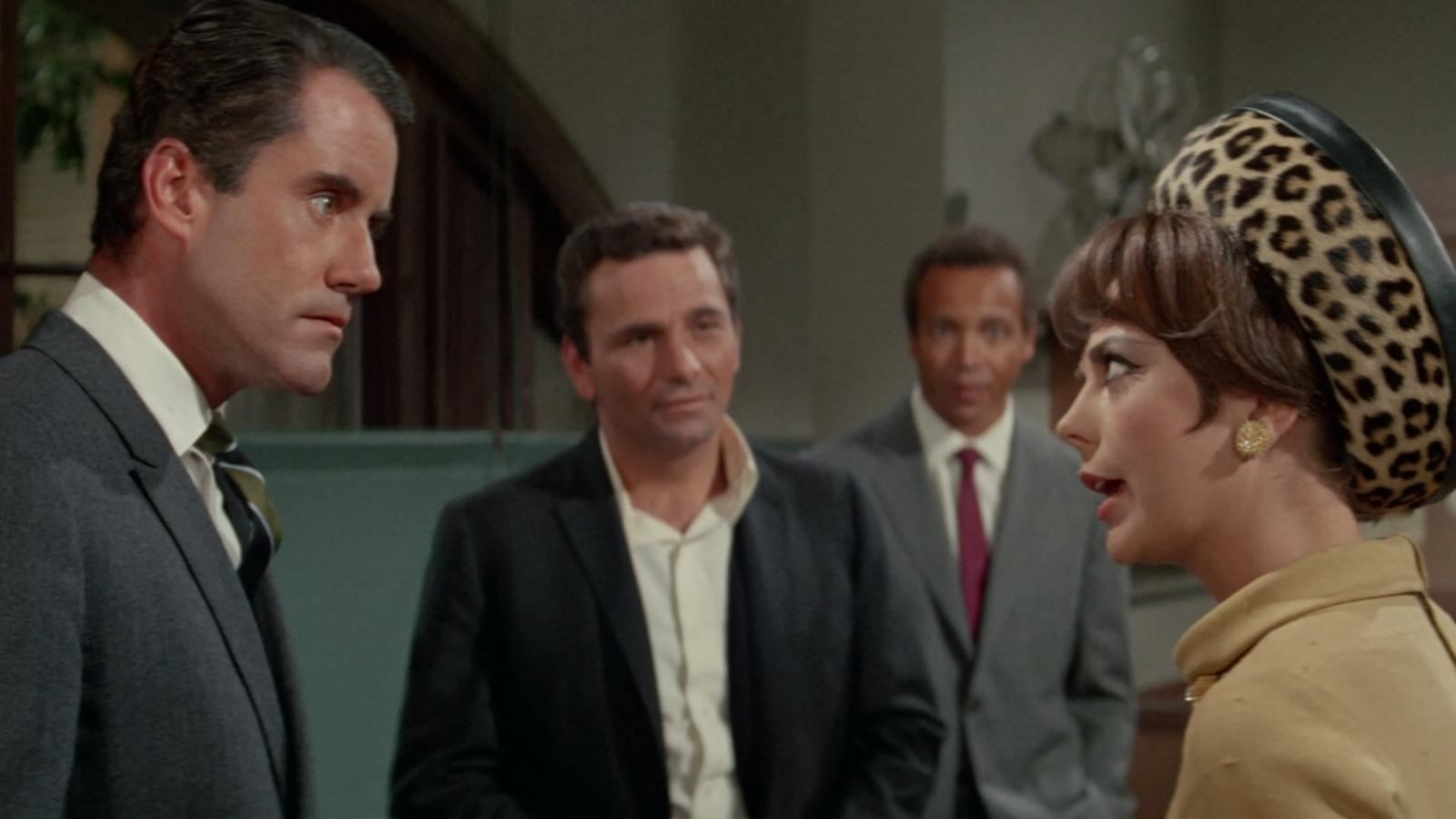
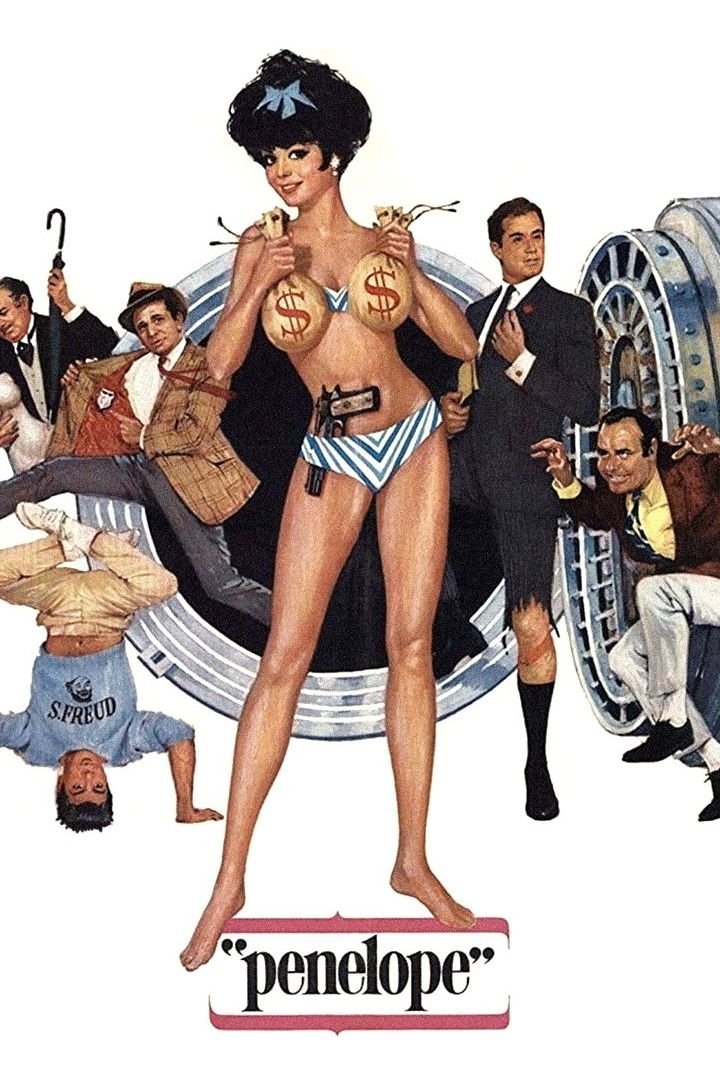
When Penelope gets married to banker James Elcott, she finds him too preoccupied with work to pay much attention to her, so she robs his bank in disguise. After she confesses to her psychiatrist, Greg Mannix, he offers to return the money for her, as he is secretly in love with her. However, he abandons the money when the police approach. Penelope becomes determined to admit to the crime, but neither James nor the police believe her story.
Insights
Plot Summary
A young heiress, Penelope, is kidnapped by her father's enemies who intend to extort a ransom. However, Penelope, bored with her life and finding her captors rather dull, decides to take matters into her own hands. She devises an elaborate plan involving multiple disguises and impersonations to outwit everyone involved, including her own father, leading to a chaotic and humorous chase.
Critical Reception
Penelope was a quirky, stylized comedy that received a mixed-to-positive reception upon its release. While some critics found its premise and execution to be overly silly and convoluted, others appreciated its unique visual style, energetic performances, and lighthearted approach to crime and romance. It was generally seen as an enjoyable, if not groundbreaking, piece of 1960s cinema.
What Reviewers Say
- Praised for its distinctive visual flair and playful tone.
- Noted for Natalie Wood's versatile and engaging performance.
- Some found the plot too convoluted and lacking in depth.
Google audience: Audience reception on Google is not readily available for this title.
Fun Fact
The film's distinctive visual style was heavily influenced by the pop art movement prevalent in the 1960s, with vibrant colors and unusual set designs.
AI-generated overview · Verify ratings on official sources