
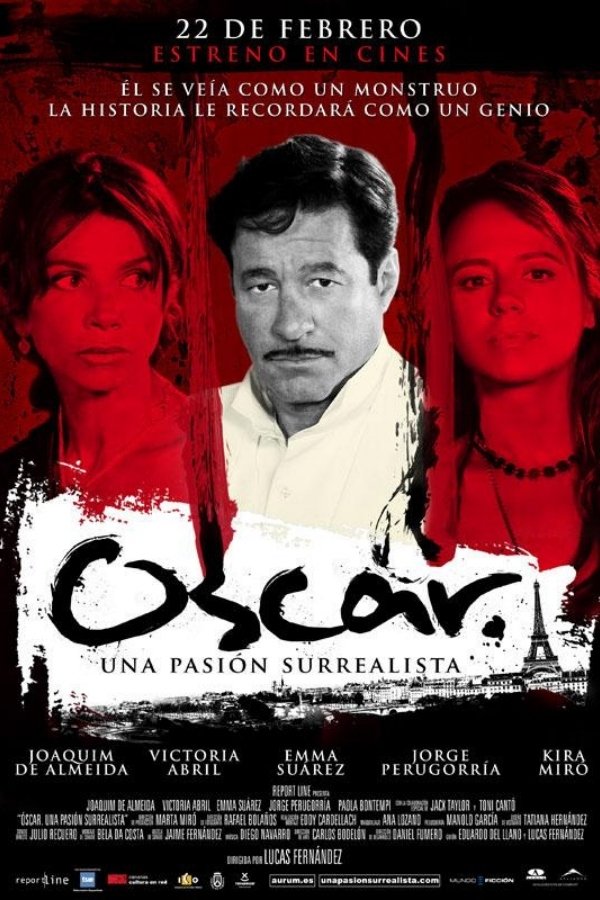
Oscar. The color of destiny
"Óscar. The Color of Destiny" is a revealing portrayal of a forgotten icon of French Surrealism: Spanish painter Óscar Domínguez, contemporary of Picasso. The film rediscovers the life of a talented artist who was ignored after he committed suicide, fifty years ago, victim of a serious illness which had disfigured his body: the Elephant Man's disease. The film is stirring and touching and compels admiration for the bohemian painter whose fate was self-destruction, after a wild crazy life. Lucas Fernández turns the life of a debauchee, who regarded himself a monster because of his disfiguring disease, into a universal story where art is the product of love and loneliness, of sex and violence before, during and after the Nazi invasion of Paris.
Insights
Plot Summary
This documentary delves into the life and legacy of the acclaimed Irish playwright and wit, Oscar Wilde. It explores his rise to fame, his tumultuous personal life, his trial for 'gross indecency', and his eventual tragic downfall. The film highlights his enduring influence on literature and culture.
Critical Reception
The documentary was generally well-received by critics for its thorough examination of Wilde's life and its insightful portrayal of his complex character. Audiences appreciated its comprehensive look at a controversial yet brilliant figure.
What Reviewers Say
- Praised for its detailed exploration of Wilde's life and works.
- Appreciated for bringing a nuanced perspective to Wilde's triumphs and tragedies.
- Noted for its archival footage and interviews contributing to a comprehensive overview.
Google audience: Information not available.
Fun Fact
The documentary features extensive use of archival materials and interviews with prominent figures who knew or were heavily influenced by Oscar Wilde, aiming to provide a definitive look at his life.
AI-generated overview · Verify ratings on official sources