
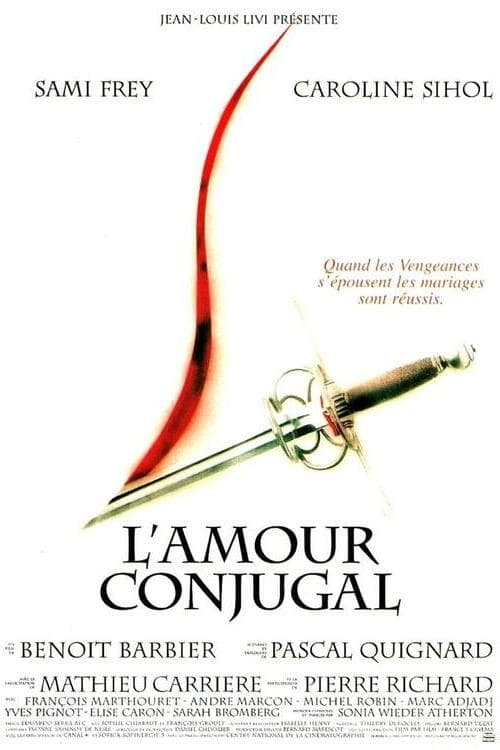
L'Amour conjugal
This French tale, set in the 17th century, chronicles the marriage between an errant knight and a beautiful spinster. The tale begins in 1629, and the knight is Nathan Le Cerf who joins the regiments of Count Anchire after he loses his entire family to the plague. Nathan's first assignment is to kill the gambling rival of the count in a duel; Nathan obeys, but gets wounded in the process. Still he makes it back to his master and is expecting a generous reward. Instead, the count reviles the knight, invokes Louis XIII's ban on dueling, and orders Nathan beheaded. Nathan will have none of that. Despite his bleeding abdominal wound, he escapes into the countryside. Initially he finds shelter with his lifelong friend, a chalk maker; he then goes on to one of his patrons, an artist. Nathan is relegated to living in a humble hut in the wilds. Eventually he meets an impoverished noblewoman, Marhte de Lairac.
Insights
Plot Summary
A wife discovers her husband's infidelity, leading to a complex emotional and psychological struggle within their marriage. As secrets unravel, the film explores themes of betrayal, desire, and the intricate dynamics of a long-term relationship. The protagonist grapples with her identity and her choices in the face of disillusionment.
Critical Reception
L'Amour conjugal received mixed to positive reviews, with critics often highlighting Nathalie Baye's powerful performance. Some praised the film's nuanced exploration of marital complexities and emotional depth, while others found its pacing and narrative somewhat challenging.
What Reviewers Say
- Praised for its strong central performance by Nathalie Baye.
- Explores the complexities of infidelity and marriage with psychological depth.
- Some found the film's deliberate pacing and somber tone to be a drawback.
Google audience: Audience reception information for this film on Google is not readily available.
Awards & Accolades
Nathalie Baye received a César Award nomination for Best Actress for her role in the film.
Fun Fact
The film was adapted from the novel 'L'Amour conjugal' by Philippe Djian, who also wrote the novel 'Betty Blue'.
AI-generated overview · Verify ratings on official sources