
Movie spotlight
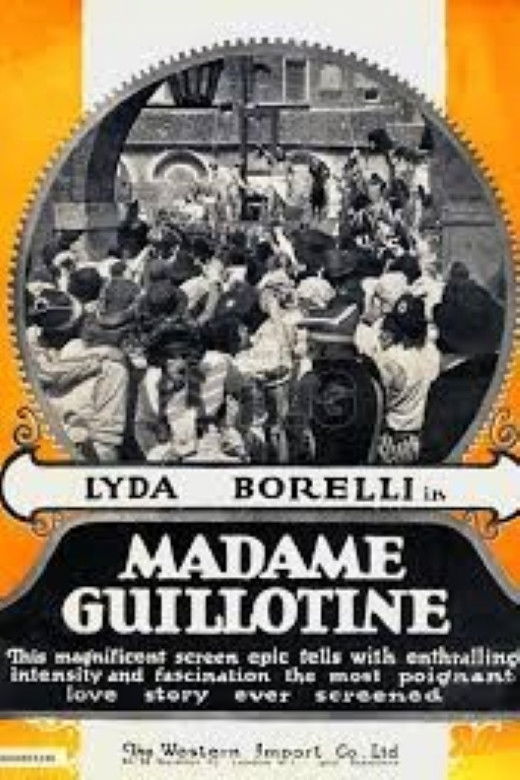
Madame Guillotine
19th century Sardou period melodrama turned into a vehicle for diva star Lyda Borelli: an aristocratic French lady leaves her unfaithful husband and becomes involved with a member of Robespierre's revolutionary regime.
Insights
Plot Summary
This silent film is a historical drama set during the French Revolution. It likely focuses on the tumultuous events and the impact of the guillotine on individuals and society. The narrative would have explored themes of justice, power, and survival in a time of great upheaval.
Critical Reception
As a film from 1916, contemporary critical reception is not widely documented in the same way as modern films. Silent films of this era were primarily assessed for their melodrama, spectacle, and adherence to historical narratives, though specific reviews for 'Madame Guillotine' are scarce in modern databases.
What Reviewers Say
Silent dramas of this period often relied on strong emotional performances and dramatic plotting.
Historical accuracy was a common, though not always stringent, expectation for films of this nature.
The use of melodrama was typical to engage audiences with the extreme events of the French Revolution.
Google audience: Information regarding audience reception from Google users for a film released in 1916 is not available.
Fun Fact
Films from the silent era, especially those dealing with historical events, were often produced with a focus on dramatic impact and visual storytelling, as intertitles had to convey much of the dialogue and narrative exposition.
AI-generated overview · Verify ratings on official sources