
Movie spotlight
Blue Bird
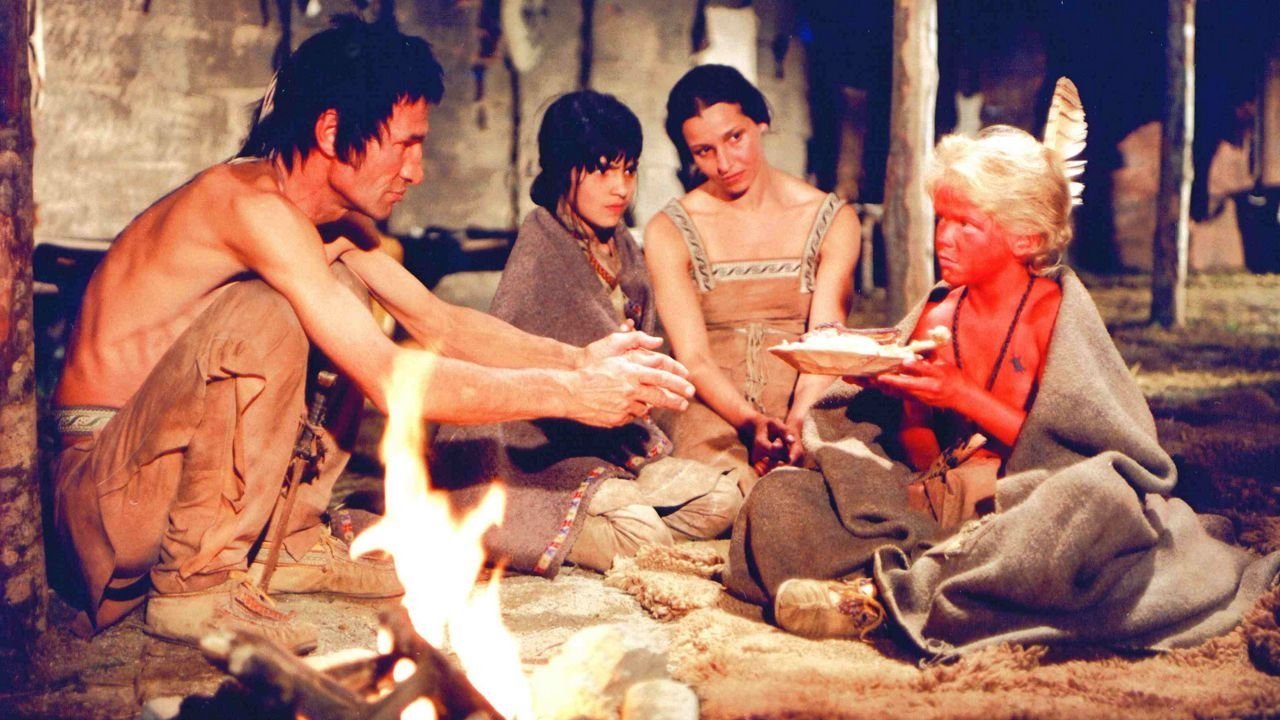
In the middle of the 18th Century, the Ruster family immigrates to America. The father, a former farm laborer, leads a hard life as a settler along with his family. One day the nine year-old George, his second-youngest son, is kidnapped by Iroquois. He is taken in by an Indian family in the place of a deceased son and receives the name "Blue Bird." The boy has homesickness and difficulties accustoming to the customs of the Indians.
Insights
Plot Summary
A group of children embarks on a magical journey to find the mythical Blue Bird of Happiness. Led by the Fairy Belle, they encounter various symbolic characters and settings that represent different aspects of life and human emotion. Their quest teaches them valuable lessons about love, contentment, and the true meaning of happiness, which they ultimately discover is not in a distant place but within themselves.
Critical Reception
The 1979 film adaptation of 'The Blue Bird' received a mixed to negative reception from critics and audiences. While praised for its ambitious scope and visual design, it was often criticized for its confusing narrative, heavy-handed symbolism, and a tone that failed to fully engage either children or adults. The star-studded cast was generally seen as underutilized in a film that struggled to find its footing.
What Reviewers Say
Praised for its lavish production design and unique visual fantasy.
Criticized for a convoluted and overly allegorical storyline.
Felt by many to be a disappointing and slow-paced adventure.
Google audience: Audience reception for "Blue Bird" is largely unknown due to a lack of widespread Google user reviews. However, general critical consensus suggests it was a visually ambitious but narratively flawed film.
Fun Fact
The film was a joint Soviet-American production, filmed in Leningrad (now Saint Petersburg) and featuring a blend of American and Soviet talent.
AI-generated overview · Verify ratings on official sources