
Movie spotlight
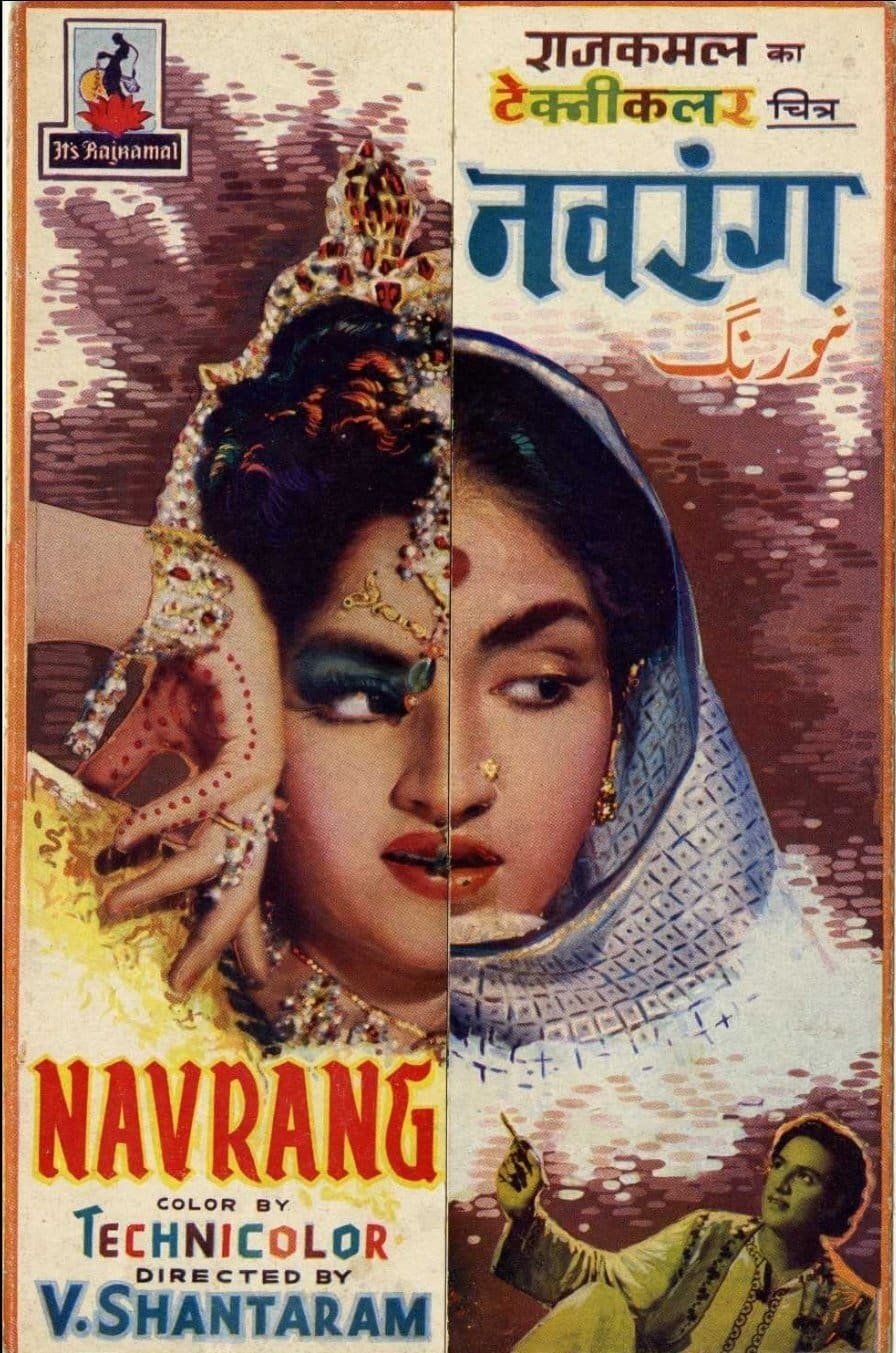
Navrang
Diwakar is a poet and loves his wife Jamuna on everything. But Jamuna does not agree that Diwakar lives out of sheer poetry in a fantasy world and the real world less and less responsible. Diwakar goes so far that he is a fantasy woman in his wife's body creates what he calls Mohini. Diwakar will soon become a recognized poet and Jamuna gives birth to a boy. Unfortunately, the happiness does not last long: Diwakar loses his job because of a critical songs against the British. Now he can no longer feed his sickly father nor his son, who is starving. All this makes Jamuna angry, but above all Diwakars growing obsession with Mohini. As Jamuna decides to live apart from Diwakar, it is destroyed internally and no longer capable of proof. Jamuna slowly realizes that she can not live without Diwakar and forgives him.
Insights
Plot Summary
A struggling artist named Jamuna discovers his talent for painting and dance, but his obsession with his muse, Mohini, leads him to a dark path. He encounters a spiritual guru who guides him towards self-realization and the true meaning of art. The film explores themes of artistic dedication, the destructive nature of obsession, and the transformative power of self-discovery.
Critical Reception
Navrang was a critical and commercial success, lauded for its vibrant visuals, musical numbers, and V. Shantaram's distinctive directorial style. The film is considered a landmark in Indian cinema for its innovative use of color and its exploration of complex psychological themes within a musical framework.
What Reviewers Say
Praised for its stunning technicolor cinematography and elaborate dance sequences.
Applauded for its powerful portrayal of an artist's internal conflict and journey.
Considered a masterpiece of musical filmmaking with a socially relevant undertone.
Google audience: Audience reviews often highlight the film's timeless music and dance performances, along with its thought-provoking narrative on art and obsession.
Awards & Accolades
Nominated for the Golden Bear at the Berlin International Film Festival. Won multiple Filmfare Awards including Best Cinematography (Technicolor).
Fun Fact
The film famously used over 35,000 yards of fabric to create the elaborate costumes and sets, contributing to its visually spectacular nature.
AI-generated overview · Verify ratings on official sources