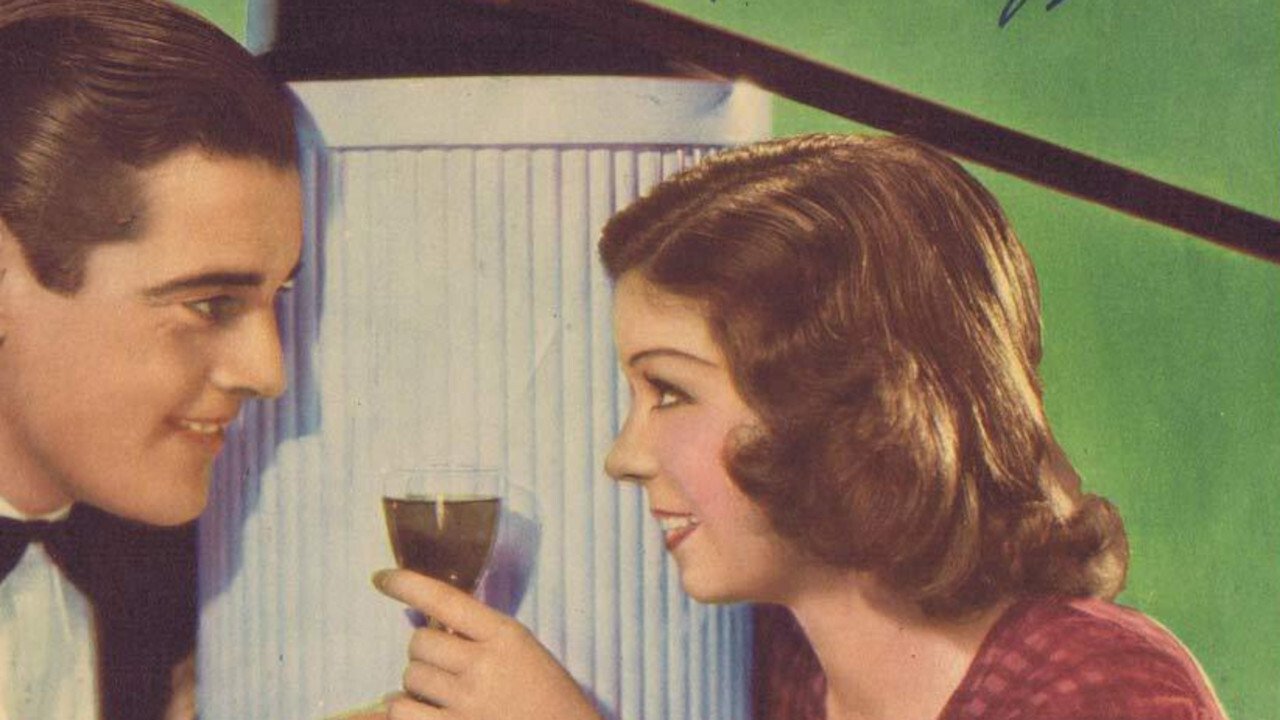

Movie spotlight
The Hit Parade
Agent Pete Garland is fired by society singer Monica Barrett after he got her a new radio contract, because she thinks her lawyer friend Teddy Leeds fits in better with her social status. To get even, Pete wants to make an unknown singer into a star. He finds Ruth Allison, drives her hard through rehearsals and makes her a star. But she is worried about her past, something she hasn't told Pete: She's an ex-convict and jumped bail in order to keep her partners in crime out of it. Further she's in love with Pete, but feels that he's still carrying a torch for Monica. When Monica's popularity is decreasing, Pete is able to get Ruth a stint on the program, the result is Monica is fired and Ruth get her job, but Monica takes revenge by revealing Ruth's past. Ruth considers it is best for her to disappear before being arrested, but she has become a star in public opinion. Will she get Pete or will she go to prison again?
Insights
Plot Summary
A wealthy young socialite, discouraged by the perceived shallowness of the elite, decides to pursue a career in music. She adopts a disguise and enters a talent contest, hoping to prove her abilities on her own merits. Along the way, she navigates romance, competition, and the challenges of the music industry.
Critical Reception
Upon its release, 'The Hit Parade' was generally seen as a lighthearted musical comedy that provided enjoyable entertainment. Critics noted its energetic musical numbers and the charm of its cast, though some found the plot to be predictable. It was considered a decent, if not groundbreaking, entry in the musical genre of the era.
What Reviewers Say
Praised for its lively musical performances and upbeat tempo.
Noted for its pleasant cast, though the storyline was considered formulaic.
Delivered light escapism typical of musical comedies of the time.
Google audience: Audience reception data for 'The Hit Parade' from 1937 is not readily available through modern aggregated platforms.
Fun Fact
The film features several popular songs of the era, aiming to capitalize on the public's appetite for musical films that mirrored the hit songs dominating the radio waves at the time.
AI-generated overview · Verify ratings on official sources