
Movie spotlight
Le Rossignol
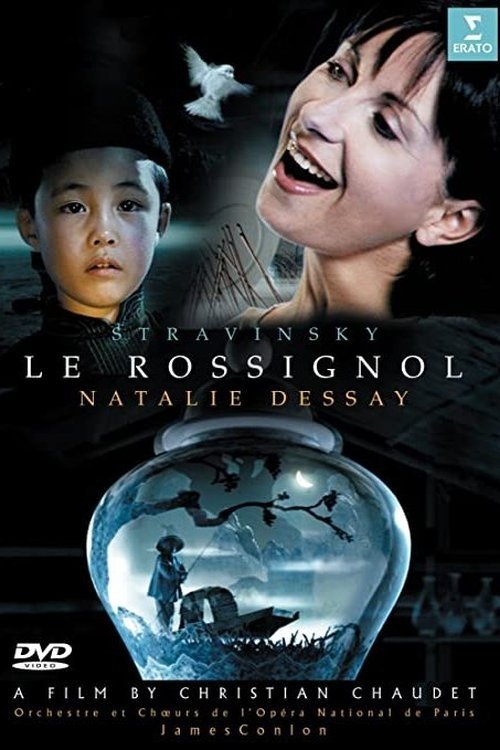
Getting into his grandfather's pottery workship at night, a little boy finds an unusually large vase. Fascinated, the child feels the still-warm material, which - whether by a miracle ot the hand of a magician, who knows? - at once changes into a magnificent piece of Chinese porcelain. Presently, from behind the great blue-enamelled trees, there appears a fisherman in his sampan... That's how the story of "The Nightingale", told all in music, begins, as the waking dream of a child in the land of Chinese art - and of mobile phones and webcams.
Insights
Plot Summary
In a distant kingdom, the Emperor of China lives a life of luxury, surrounded by opulence and technological marvels. His greatest treasure is a beautiful mechanical nightingale, whose song is more enchanting than any real bird's. However, when a real nightingale is discovered, its natural melody captivates the Emperor, leading to a rivalry between the artificial and the authentic. The story explores themes of artifice versus nature, the ephemeral nature of beauty, and the true meaning of happiness.
Critical Reception
Critically, "Le Rossignol" was generally well-received, particularly for its stunning animation and artistic direction. Audiences appreciated its faithful adaptation of the Hans Christian Andersen tale, finding it a charming and visually engaging experience. The film was noted for its sophisticated visual style and its ability to appeal to both children and adults.
What Reviewers Say
Praised for its exquisite and detailed animation.
Lauded for its poignant retelling of a classic fairy tale.
Appreciated for its thoughtful exploration of themes of beauty and authenticity.
Google audience: Information not available for Google user reviews for this specific film.
Fun Fact
The film's visual style is heavily inspired by traditional Chinese ink wash paintings, giving it a unique and artistic aesthetic.
AI-generated overview · Verify ratings on official sources