
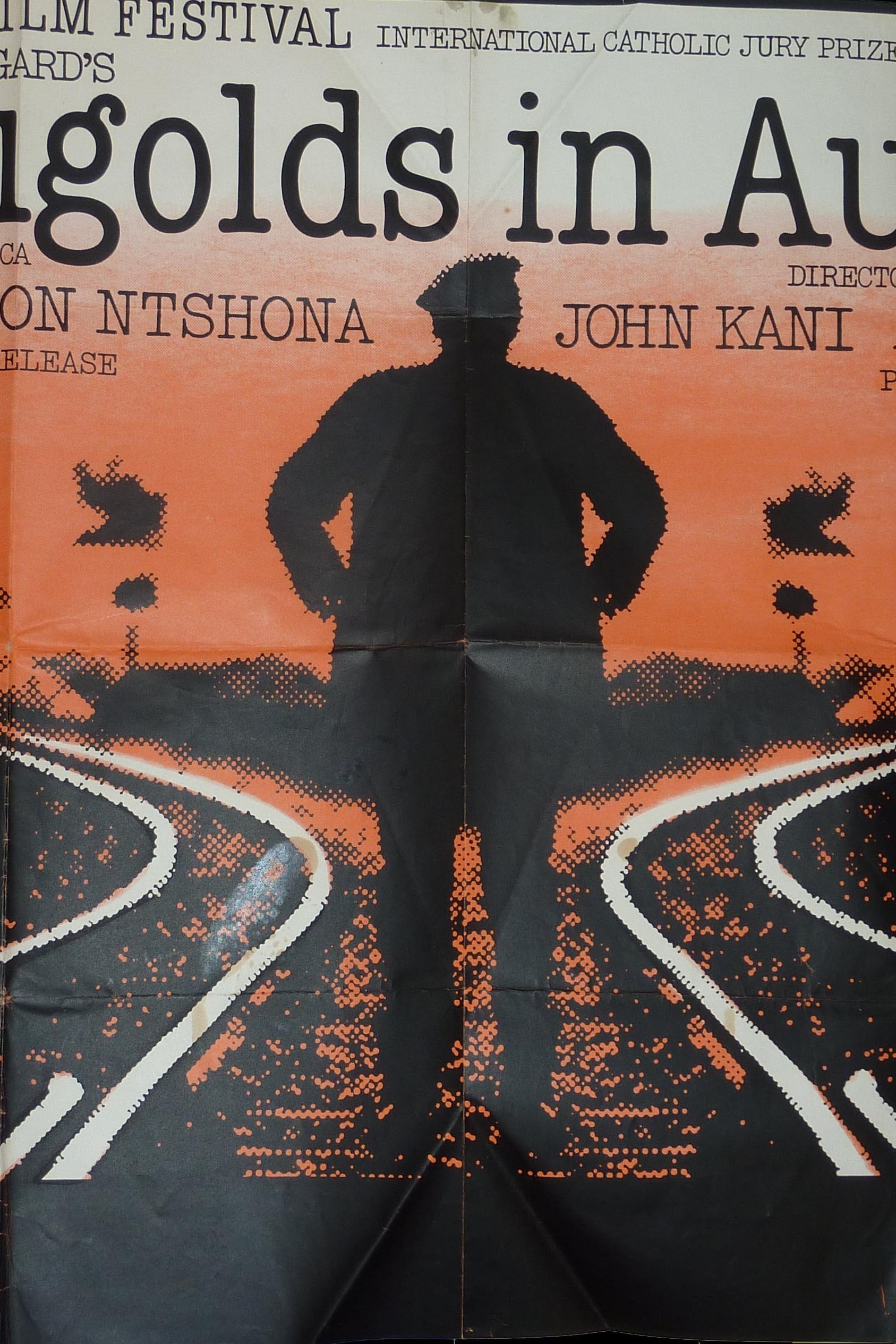
Movie spotlight
Marigolds in August
Marigolds in August was written by Athol Fugard, who in the early 1980s was South Africa's most celebrated playwright. Fugard's intense political opinions were enough for the USSR to object to Marigolds being shown in the 1980 Berlin Festival, but the objections were dropped when it was learned that Fugard had already built up a strong fan following in Eastern Europe (for various reasons, the film was not released in the US until 1984). Winston Ntshona stars as a black South African gardener who travels by foot into the white community looking for a job. Upon arriving, Ntshona discovers that another black, John Kani, may have been hired for that job. Ntshoa ruins the chances for himself and Kani by accusing the other man of planning a theft. Both men are eventually hired by a fellow outcast, a white poacher (played by Anthol Fugard himself). The message would seem to be that if the have-nots of the world stick together, it matters little how badly they're treated by the "haves."
Insights
Plot Summary
Set in a rural South African village, the film tells the story of Themba, a young boy living under apartheid. Themba dreams of a better future, seeking solace and escape through the vibrant marigolds that bloom in his mother's garden. His journey is marked by the harsh realities of segregation and the resilience of the human spirit.
Critical Reception
Marigolds in August was a critically acclaimed film that highlighted the struggles and resilience of Black South Africans under apartheid. It was praised for its powerful performances, its poignant storytelling, and its sensitive portrayal of childhood innocence amidst political oppression.
What Reviewers Say
Praised for its moving portrayal of childhood under apartheid.
Lauded for strong performances, particularly from the young lead.
Commended for its poetic use of the marigold imagery as a symbol of hope.
Google audience: Information regarding specific Google user reviews for this film is not readily available.
Fun Fact
The film was shot on location in South Africa and is notable for being one of the few films from the era to directly address the impact of apartheid on children with such sensitivity.
AI-generated overview · Verify ratings on official sources