
Movie spotlight
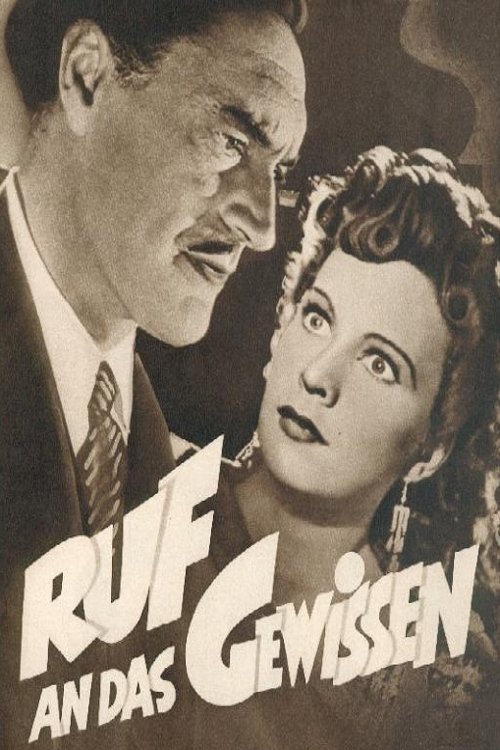
Ruf an das Gewissen
Ten years ago, the "Andree case" was seemingly solved. Now criminal investigator Husfeld is to reopen it, as doubts have arisen about the guilt of Helga Andree, who was convicted at the time. She is said to have pushed her former rival, the singer Elinor Gyldenborg, off the roof garden and killed her. Husfeld seeks advice from his friend, the writer Volkmar Hollberg. He turns the case into a radio play, which is broadcast on the radio under the title The Jump from the Roof Garden. The broadcast brings back memories of the night of the crime for those present at the time...
Insights
Plot Summary
In the aftermath of World War II, a German prisoner of war returns home to find his family struggling under the occupation. He grapples with the moral complexities of his past actions and the harsh realities of his present, seeking redemption and a path towards rebuilding his life and his country. The film explores themes of guilt, responsibility, and the difficult process of confronting the nation's past.
Critical Reception
This early post-war German film was an attempt to address the nation's wartime guilt and contributed to the 'Trümmerfilm' (rubble film) genre. While appreciated for its thematic relevance, its artistic merit and dramatic execution were often considered conventional for its time, reflecting the challenges of cinematic expression in a war-torn society.
What Reviewers Say
Praised for its topical exploration of post-war German conscience.
Seen as a significant, though perhaps artistically restrained, examination of guilt and responsibility.
Its narrative is considered direct and thematically heavy, fitting the post-war mood.
Google audience: Information on Google user reviews for this film is not readily available.
Fun Fact
The film was produced by DEFA (Deutsche Film AG), the East German state-owned film studio, and was one of its earliest productions, aiming to establish a new cinematic voice for Germany.
AI-generated overview · Verify ratings on official sources