
Movie spotlight
Tischlein deck dich
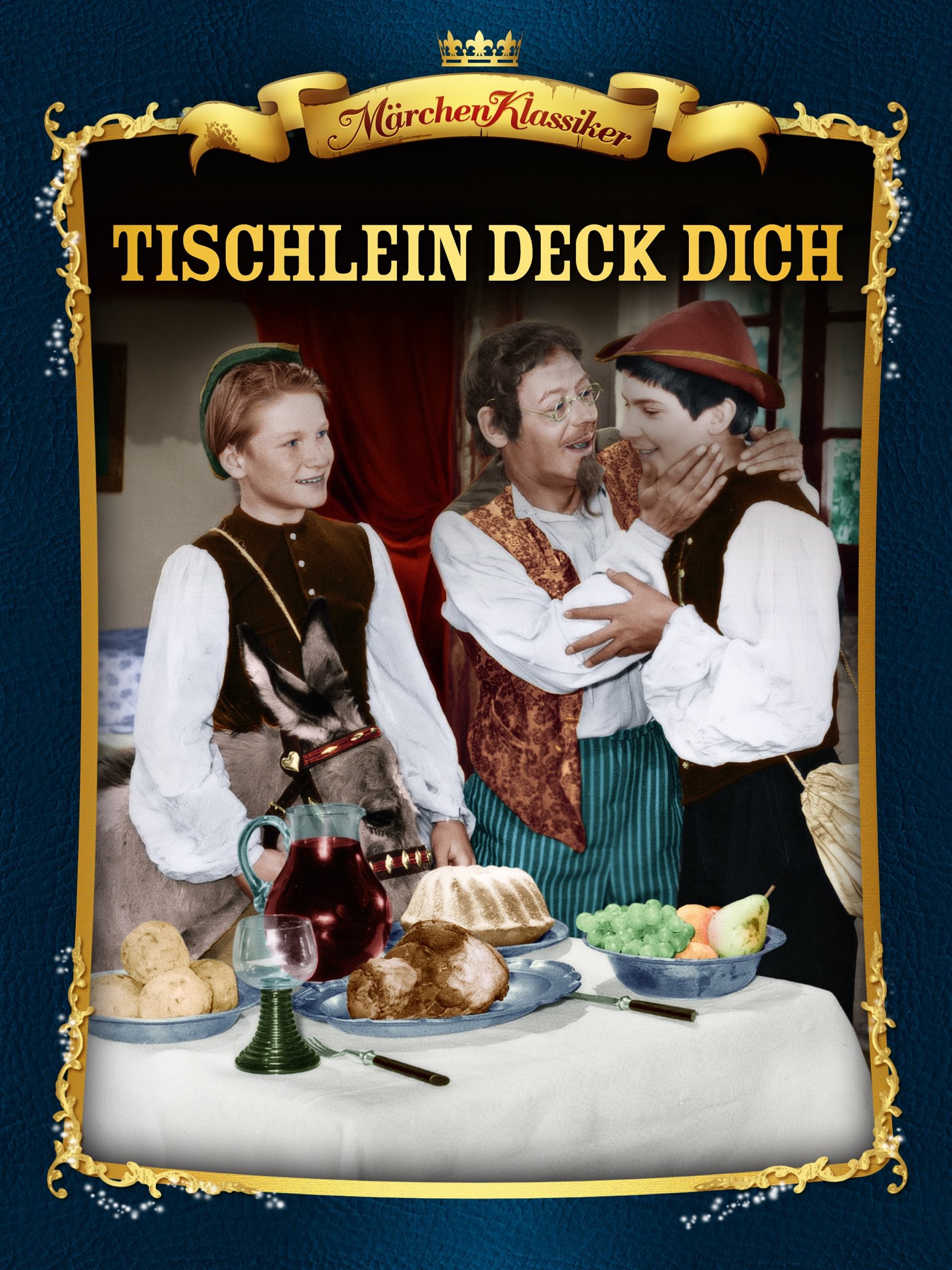
Once upon a time, there had been a tailor who sent his three sons out into the world, so that they might find fortune and learn something proper. The oldest went to a carpenter and was gifted a small table at the end of his apprenticeship. It set itself with all kinds of delicacies when ordered to. When he visits a hostelry, however, he gets cheated from the table by the innkeeper. The second son became the apprentice to a miller and received a donkey as a parting gift which could spew gold. But he as well got cheated out of the wages of his apprenticeship by the criminal innkeeper. The third son conveniently received a club as a parting gift from his turner master. Spontaneously, he helps his brothers reclaim what was theirs, and the thievish innkeeper experiences a bad surprise.
Insights
Plot Summary
A humble tailor is gifted a magical tablecloth by a forest gnome that magically produces any food requested. This gift brings him great fortune and allows him to enjoy the finer things in life. However, his envious brothers steal the tablecloth, leading to a series of comical and adventurous events as the tailor tries to retrieve his magical possession and expose his brothers' deceit.
Critical Reception
The film was a popular and well-received fairy tale adaptation in post-war Germany, praised for its charming storytelling and faithfulness to the Brothers Grimm original. It became a staple for family viewing and is fondly remembered for its whimsical depiction of the magical tablecloth.
What Reviewers Say
Praised for its faithful adaptation of the classic fairy tale.
Appreciated for its charming and whimsical presentation.
A beloved family film in Germany, evoking nostalgia.
Google audience: Audience reception is generally positive, with many viewers recalling it fondly as a magical childhood film. The simple yet effective storytelling and the allure of the magical tablecloth are often highlighted as key enjoyments.
Fun Fact
The magical tablecloth, a central element of the story, was intricately designed to appear as if it could truly produce food, a feat achieved through clever filmmaking techniques of the era.
AI-generated overview · Verify ratings on official sources