
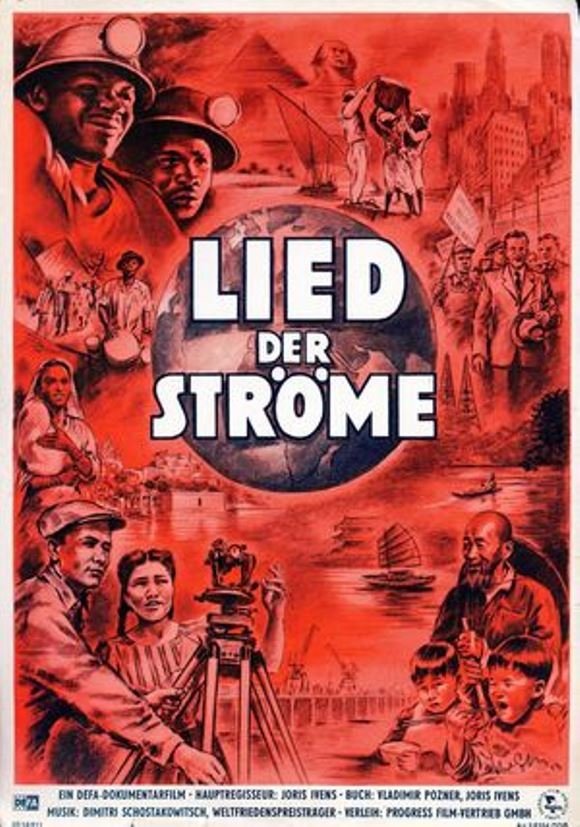
Song of the Rivers
An allegorical documentary about the workers of the world, whose common destinies and hopes for peace are symbolically united by the rivers that run through their respective lands. The film was shot on the Volga, the Mississippi, the Nile, the Yangtze, the Amazon and the Ganges and combines these images of five continents with the music of Dmitri Shostakovich and the poetry of both Bertolt Brecht and Paul Robeson.
Insights
Plot Summary
Set in the early 20th century, this Soviet drama follows the lives of Russian intellectuals and ordinary people grappling with the tumultuous social and political changes of the era. The narrative spans across different regions of Russia, highlighting the diverse experiences and struggles of those living through a period of immense transformation. It explores themes of revolution, societal upheaval, and the search for identity amidst historical shifts.
Critical Reception
As a Soviet-era production, 'Song of the Rivers' was generally well-received within the Soviet Union, aligning with the prevailing ideological narratives of the time. Internationally, its reception was more varied, often viewed through the lens of its political context. Critical analysis in the West frequently noted its propagandistic elements alongside its cinematic qualities.
What Reviewers Say
- Praised for its sweeping scope and depiction of historical events from a Soviet perspective.
- Criticized by some Western reviewers for its ideological messaging and dramatic simplifications.
- Often noted for its strong performances and Gerasimov's directorial hand in portraying large-scale social change.
Google audience: Information on specific Google user reviews for this historical film is not readily available.
Fun Fact
The film is part of a larger cinematic tradition in Soviet cinema that aimed to portray the struggles and triumphs of the Russian people leading up to and during the revolution, often emphasizing collectivism and socialist ideals.
AI-generated overview · Verify ratings on official sources