
Palm Trees in the Snow
Spain, 2003. An accidental discovery leads Clarence to travel from the snowy mountains of Huesca to Equatorial Guinea, to visit the land where her father Jacobo and her uncle Kilian spent most of their youth, the island of Fernando Poo.
Insights
Plot Summary
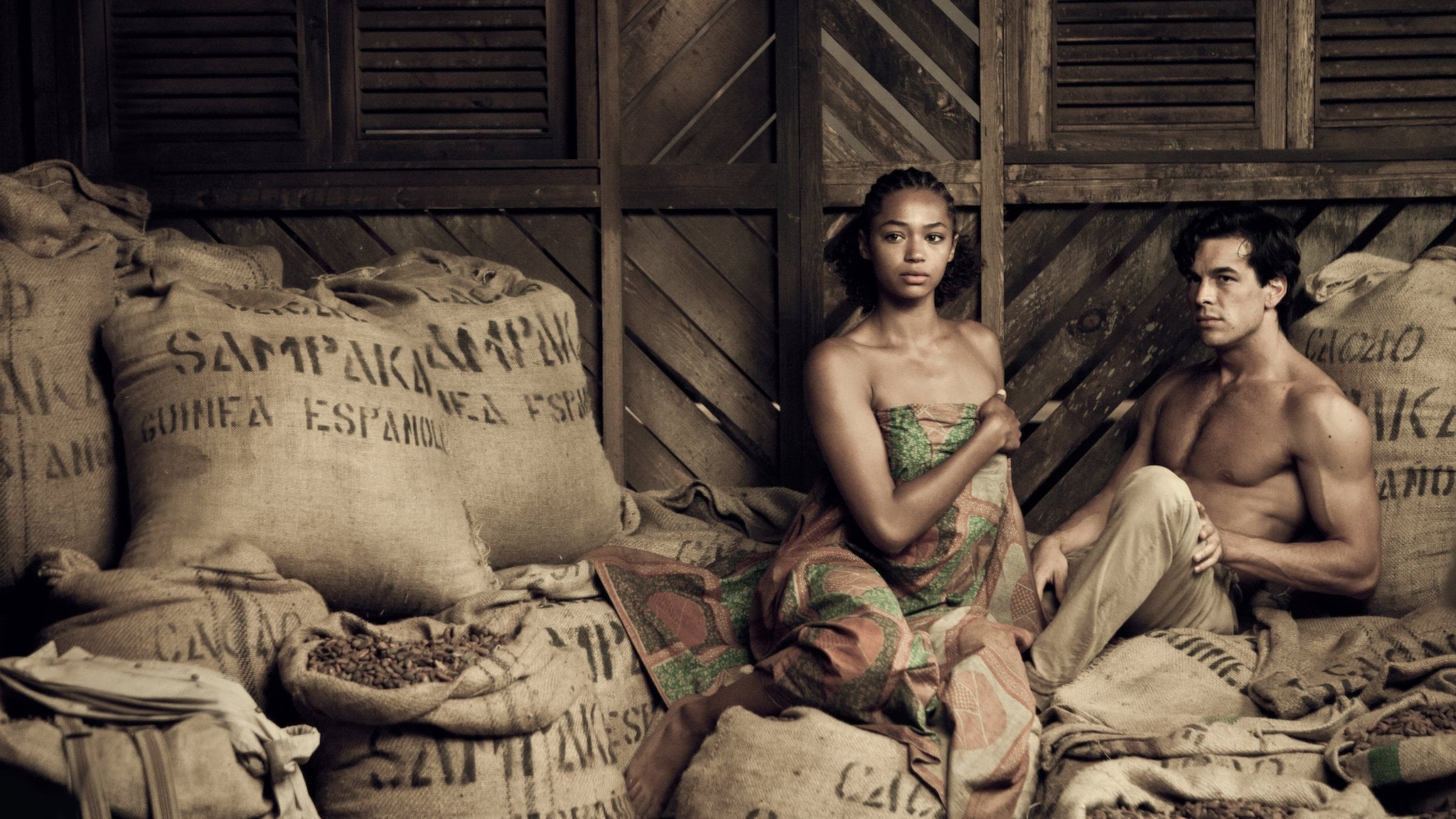
Set in the mid-20th century, the story follows Kilian, a young Spaniard who travels to the African country of Equatorial Guinea to work on a cocoa plantation. There, he falls deeply in love with the local woman, Bisila, despite the societal and racial barriers they face. Their passionate romance unfolds against a backdrop of colonial unrest and personal sacrifice, leading to a heartbreaking separation and a legacy that echoes through generations.
Critical Reception
The film garnered a generally positive reception, particularly for its lush cinematography, emotional storytelling, and strong performances from the lead actors. While some critics found the plot somewhat predictable, its romantic sweep and historical context resonated with audiences. It was a significant box office success in Spain.
What Reviewers Say
- Praised for its visually stunning depiction of Equatorial Guinea and its evocative romantic narrative.
- Commended for the compelling chemistry between the lead actors, Mario Casas and Berta Vázquez.
- Noted for its ambitious scope and emotional depth, though some found the pacing occasionally slow.
Google audience: Audiences generally appreciated the film's beautiful visuals and the passionate love story at its core. Many viewers were moved by the characters' struggles against societal norms and the dramatic conclusion. Some found the film to be a touching, albeit lengthy, romantic epic.
Awards & Accolades
Nominated for Best Film at the Goya Awards (Spain's national film awards), and won Best Cinematography at the Premios Feroz. It also received nominations for Best Actor and Best Supporting Actress at the Goya Awards.
Fun Fact
The film was shot on location in Gran Canaria (Canary Islands, Spain), Colombia, and Cuba, with the Canary Islands doubling for Equatorial Guinea to recreate the lush, tropical environment of the mid-20th century.
AI-generated overview · Verify ratings on official sources