
Movie spotlight
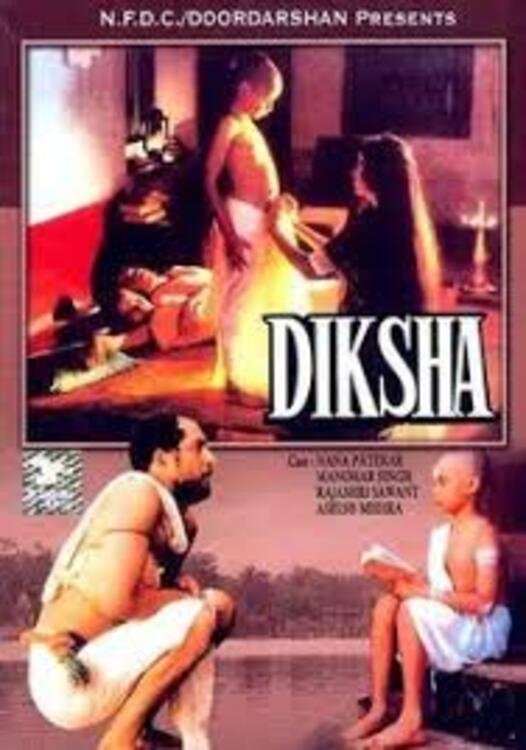
Diksha
Circa British Rule in India, a man vows to make his only surviving son, Narayan, alias Nani, a Brahmachari to atone for the deaths of five of his children. He takes this child to a remote village in Karnataka, South India, where he leaves his 11 year old son in the care of a learned Archarya, Udup Pandit. Here Nani gets to meet two other disciples of the Archarya, as well as his widowed daughter, Yamuna, and another male by the name of Shrikar Upadhyay, who also teaches the British how to read and write in Hindi. The Archarya goes away for a few days, and when he returns nothing is the same anymore. His daughter is pregnant, the villagers are all set to remove her from the village, they are also angry with him for refusing Yamuna to follow the traditional way of a Hindu widow.
Insights
Plot Summary
A young man from a lower caste is caught between traditional societal expectations and his own aspirations. He struggles against the deeply entrenched caste system that dictates his life, facing discrimination and personal sacrifices. The film explores his journey of self-discovery and rebellion against a rigid social hierarchy.
Critical Reception
Diksha was critically acclaimed for its powerful portrayal of the caste system in India and its impact on individuals. It was lauded for its sensitive direction, strong performances, and thought-provoking narrative, earning recognition at international film festivals.
What Reviewers Say
Praised for its unflinching look at India's caste system.
Celebrated for the compelling performances, especially from Naseeruddin Shah and Om Puri.
Recognized for its realistic and poignant depiction of social injustice.
Google audience: Information on Google user reviews and ratings for Diksha is not readily available.
Awards & Accolades
won the National Film Award for Best Feature Film in Hindi
Fun Fact
The film was inspired by a novel by Sudhakar Shanker Apte and explores the socio-cultural dynamics of rural Maharashtra.
AI-generated overview · Verify ratings on official sources