
Movie spotlight
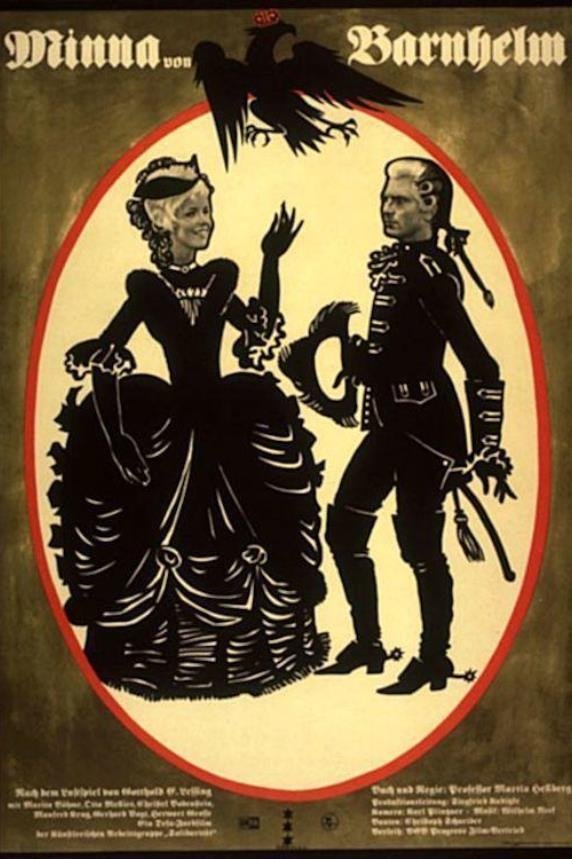
Minna von Barnhelm oder Das Soldatenglück
This film takes place during the Seven Years' War. The Prussian Major von Tellheim has become engaged to the Saxon noblewoman Minna von Barnhelm. After the war, the King - in an unwarranted move - deprives the major of his honor. Von Tellheim becomes impoverished and, filled with shame, breaks off his relationship to Minna. An innkeeper in Berlin, who is a police informer, makes the Major move to a shabby little attic because he cannot pay his debt. In the meantime, Minna has also arrived at the inn. She and her lady's maid Franziska are questioned and spied on by the nosy innkeeper. Minna has followed her beloved Tellheim and she now cunningly manages to elicit a new declaration of love from him...
Insights
Plot Summary
In this adaptation of Lessing's classic comedy, Major Tellheim, a proud Prussian officer, falls deeply in love with the wealthy and beautiful Minna von Barnhelm. However, his military honor and a misunderstanding regarding Minna's fortune create significant obstacles to their union. The play humorously explores themes of love, honor, and social class in 18th-century Prussia.
Critical Reception
This television adaptation of Lessing's celebrated play was generally well-received for its faithful portrayal of the source material and its engaging performances. It is appreciated for bringing a classic German literary work to a wider audience.
What Reviewers Say
Praised for its competent direction and strong lead performances.
Seen as a faithful and accessible rendition of Lessing's famous comedy.
Appreciated for its historical setting and exploration of Prussian ideals.
Google audience: Audience reception information for this specific television adaptation is not readily available.
Fun Fact
This 1962 television film is an adaptation of Gotthold Ephraim Lessing's 1767 comedy of the same name, considered one of the most important German plays of the Enlightenment.
AI-generated overview · Verify ratings on official sources