
Movie spotlight
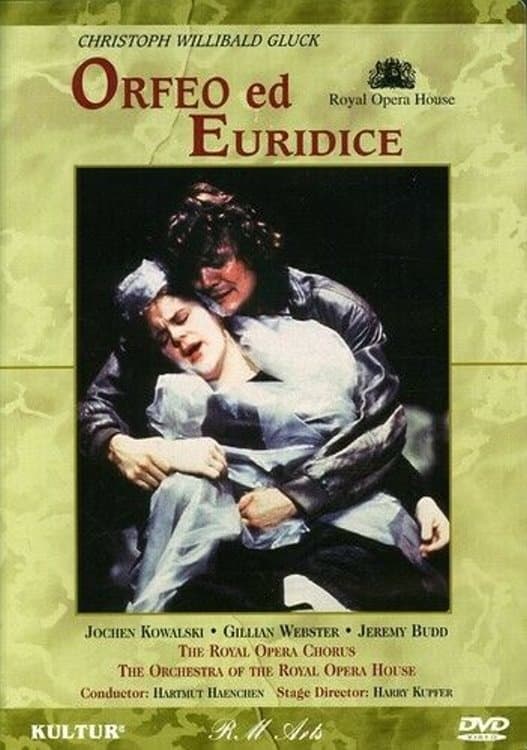
Orfeo Ed Euridice
Performed live at the Royal Opera House, Covent Garden, Gluck's opera in three acts is conducted by Hartmut Haenchen. Performers include Jochen Kowalski, Gillian Webster and Jeremy Budd, alongside the Royal Opera Chorus and Orchestra. When Orpheus mourns for his late wife Eurydice, the god Cupid offers him the chance to descend into the underworld and lead her back to the land of the living, on the condition that he does not look at her face. He sets out on his journey, but his path to the Elysian Fields is blocked by the fierce Furies.
Insights
Plot Summary
This opera tells the myth of Orpheus, a legendary musician whose music can charm any living thing. When his beloved wife Eurydice dies, Orpheus descends into the underworld to bring her back. His plea moves Hades and Persephone, who agree to let Eurydice return, provided Orpheus does not look at her until they reach the upper world. He fails, and Eurydice is lost to him forever.
Critical Reception
This production of Gluck's "Orfeo Ed Euridice" was primarily a television film adaptation, often praised for its visual interpretation of the myth and the emotional depth of its lead performers. While perhaps not as widely reviewed as stage productions, it garnered attention for bringing the classic opera to a broader audience. Critical commentary tended to focus on the effective staging for the medium and the poignant performances, particularly of Orpheus and Eurydice.
What Reviewers Say
Praised for its visually compelling adaptation for television.
The emotional weight of the performances, especially Orpheus, was frequently highlighted.
Successfully translated the operatic experience to a new medium.
Google audience: Audience reception data for this specific television film is not readily available.
Fun Fact
This 1991 television film is based on the 1762 opera 'Orfeo ed Euridice' by Christoph Willibald Gluck, one of the most influential operas of its time.
AI-generated overview · Verify ratings on official sources