Movie spotlight
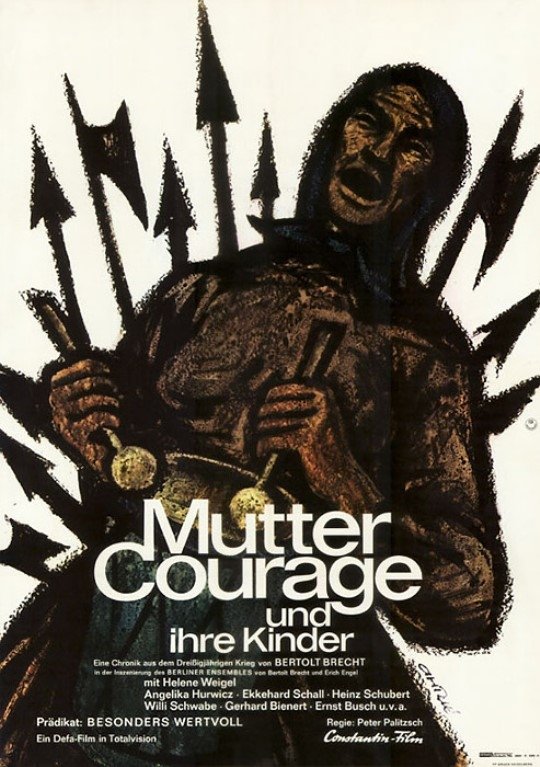
Mother Courage and Her Children
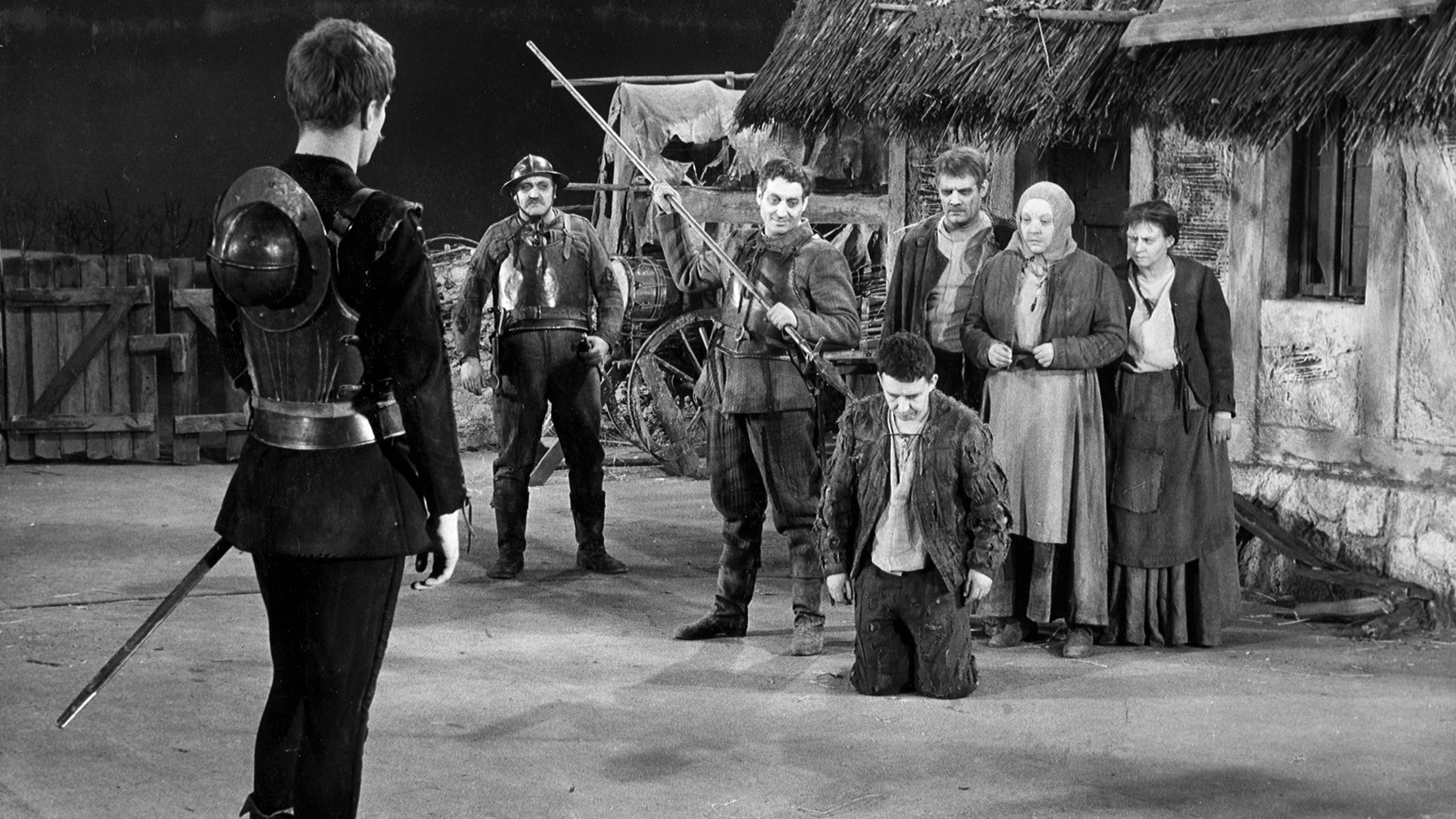
During the Thirty Years' War, the camp-follower Anna Fierling, called "Mother Courage", travels the length and breadth of Europe with her covered wagon. She does not care if it's Catholics or Protestants she trades with as long as business thrives. She loses her three children as a result of the war: bold and spirited Eilif, sincere and upright Swiss Cheese and mute Katrin, who saves the children of Halle by beating a drum on a farmstead roof In wartime, the Fierling children's virtues prove to be deadly. Yet, Mother Courage, remains incorrigible. She will not have anyone "spoil the war" for her and so sets out once more after the soldiers with her wagon.
Insights
Plot Summary
Based on Bertolt Brecht's iconic 1941 play, this film adaptation follows the resourceful Mother Courage as she follows the armies during the Thirty Years' War, trying to profit from the conflict by selling goods to soldiers. Despite her best efforts to protect her children from the war's ravages, they are all tragically lost due to her own involvement in the very conflict she seeks to exploit. The story serves as a powerful anti-war statement, exploring the moral compromises and devastating consequences of war profiteering.
Critical Reception
The 1961 film adaptation of "Mother Courage and Her Children" is generally well-regarded for its faithful portrayal of Bertolt Brecht's complex themes and its strong performances, particularly from Maria Becker in the titular role. While direct critical reviews for this specific film adaptation are less abundant than for the play itself, it is recognized as a significant cinematic interpretation of a foundational piece of 20th-century theatre. Its reception highlights the enduring power of Brecht's message against war and its human cost.
What Reviewers Say
Praised for its faithful adaptation of Brecht's anti-war message.
Maria Becker's performance as Mother Courage is frequently cited as a powerful and compelling portrayal.
The film effectively captures the tragic irony of a mother trying to profit from war while losing her children to it.
Google audience: Information on specific Google user reviews for this 1961 film adaptation is not readily available. However, general audience reception of Bertolt Brecht's work often highlights its intellectual depth and its stark portrayal of the horrors of war.
Fun Fact
The 1961 film is a German-language production, adapted from Bertolt Brecht's original German play, and was directed by Theodor T. A. L. Corra, who was a prolific filmmaker and theater director in Germany.
AI-generated overview · Verify ratings on official sources