
Movie spotlight
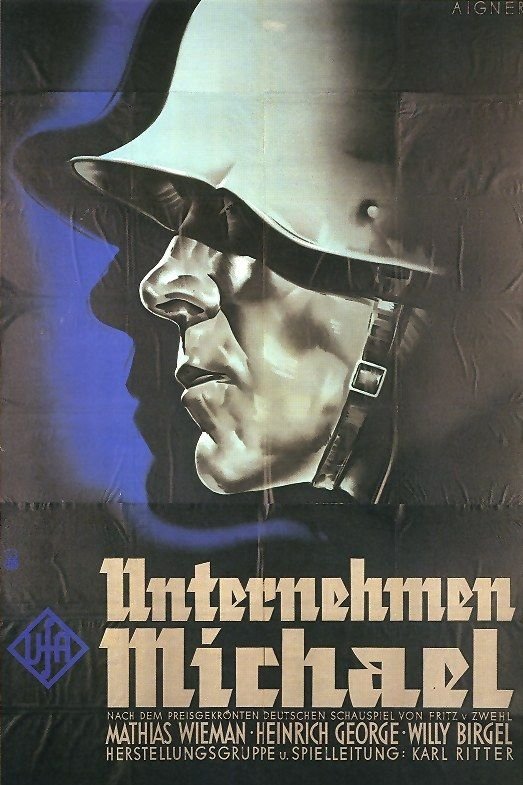
Operation Michael
During the Great War, German soldiers are persuaded to die heroically in order to take a French village held by the British.
Insights
Plot Summary
The film depicts the large-scale German Spring Offensive of 1918, known as Operation Michael, during World War I. It follows the experiences of German soldiers as they prepare for and participate in this massive, ultimately unsuccessful, push on the Western Front. The narrative focuses on the bravery, camaraderie, and the harsh realities of trench warfare.
Critical Reception
As a product of its time and a propaganda film of the Third Reich, "Operation Michael" was intended to glorify German military efforts and soldiers. Contemporary reviews within Germany likely praised its patriotic themes and technical aspects. International reception and critical analysis from a historical perspective often view it through the lens of its propaganda purpose, acknowledging its cinematic qualities while critically examining its historical and ideological context. Modern critical assessment is rare and usually contextualized within the study of Nazi-era cinema.
What Reviewers Say
Praised for its depiction of German wartime bravery and spirit.
Often viewed as a significant example of Third Reich propaganda cinema.
Technically competent for its era, with a focus on battlefield action.
Google audience: Information on Google user reviews for "Operation Michael" (1937) is not readily available, making it difficult to summarize audience reception.
Fun Fact
The film was produced by the German film studio Tobis Filmkunst and was one of the major German war films released during the Nazi era.
AI-generated overview · Verify ratings on official sources