
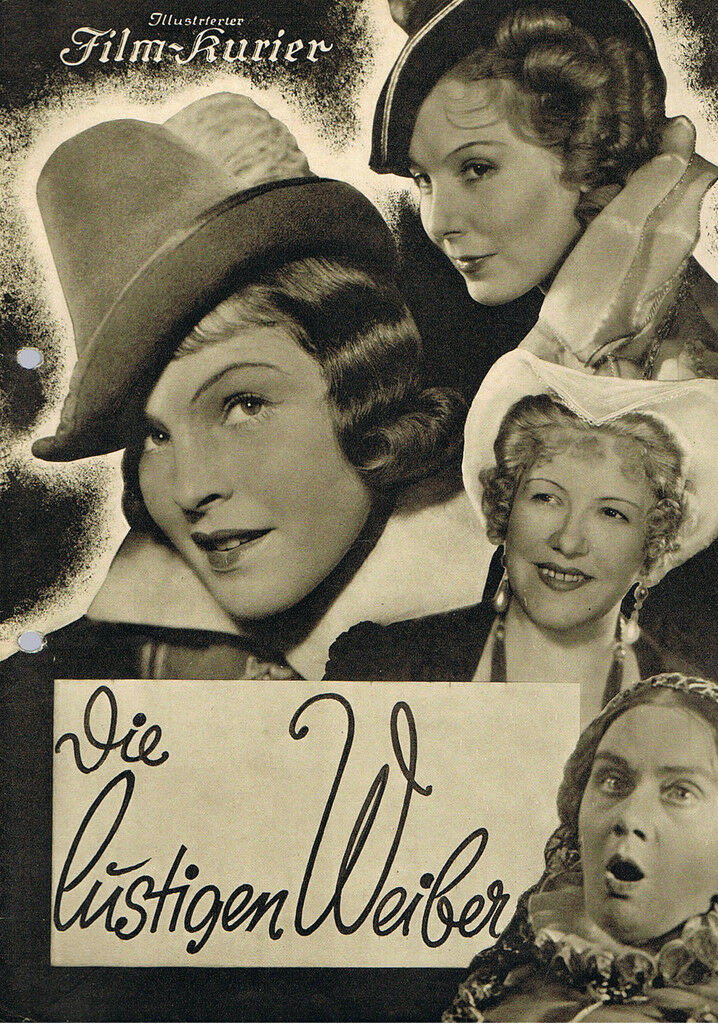
Movie spotlight
The Merry Wives
When Sir John Falstaff decides that he wants to have a little fun he writes two letters to a pair of Window wives: Mistress Ford and Mistress Page. When they put their heads together and compare missives, they plan a practical joke or two to teach the knight a lesson. But Mistress Ford's husband is a very jealous man and is pumping Falstaff for information of the affair. Meanwhile the Pages' daughter Anne is besieged by suitors.
Insights
Plot Summary
This musical comedy is an adaptation of Otto Nicolai's opera 'The Merry Wives of Windsor,' which in turn is based on Shakespeare's play. The story follows the mischievous and resourceful wives of Windsor as they outwit the lecherous Sir John Falstaff. Through a series of comical schemes and disguises, they teach him a lesson about respecting their virtue and intelligence.
Critical Reception
As a lighthearted musical comedy from the 1930s, 'Die lustigen Weiber von Windsor' was generally received as pleasant entertainment, fitting into the popular musical film genre of its time in Germany. Contemporary reviews likely praised its musical numbers and comedic performances, while modern assessments might view it as a charming but perhaps dated example of its era.
What Reviewers Say
Praised for its musical sequences and comedic performances.
Seen as a charming and lighthearted adaptation of classic material.
A representative example of German musical comedies from the 1930s.
Google audience: Information on specific Google user reviews for this 1936 German film is not readily available in English-language sources.
Fun Fact
The film is based on the opera 'Die lustigen Weiber von Windsor' by Otto Nicolai, which itself is an operatic adaptation of William Shakespeare's play 'The Merry Wives of Windsor'.
AI-generated overview · Verify ratings on official sources