
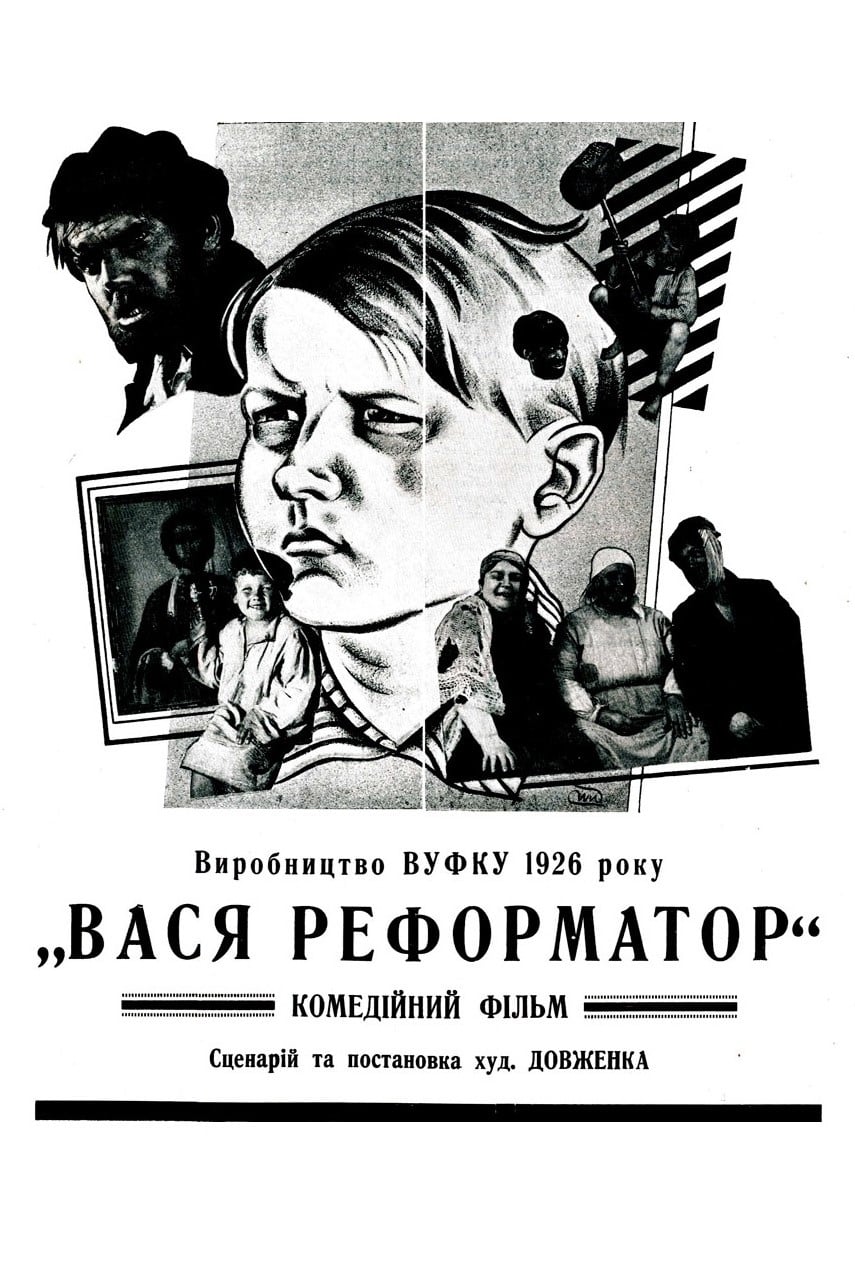
Movie spotlight
Vasya, the Reformer
Lost film directed by Oleksandr Dovzhenko (his first film) and Favst Lopatynskyi. It is a satire of the NEP period. Vasia, the son of a factory’s worker, is attracted by the romance of adventures. And he goes to look for them. He saves a drowning drunkard who tries to beat him. Vasia escapes from him in a vehicle parked on the shore. However, the vehicle belongs to a superintendent who, when he does not find it, stages its theft. Meanwhile, Vasia exposes priests in the church. As a result, the church is turned into a cinema, and the priest becomes a cinema technician. And finally, Vasia’s last deed is catching a criminal at home and denouncing him to the militia.
Insights
Plot Summary
A young boy named Vasya is sent to a disciplinary colony after committing a crime. He struggles with the harsh environment and the rules of the colony, but eventually finds a mentor in a kind instructor who helps him to see the error of his ways and offers him a chance at redemption. The film explores themes of juvenile delinquency, social reform, and the power of positive influence.
Critical Reception
As a silent film from the Soviet era, 'Vasya, the Reformer' is recognized for its early exploration of social issues and its dramatic narrative. While specific contemporary reviews are scarce due to its age and origin, it is often cited as an example of early Soviet cinema's engagement with themes of rehabilitation and societal change. It is noted for its earnest portrayal of its subject matter.
What Reviewers Say
Praised for its compassionate depiction of a troubled youth.
Acknowledged for its early foray into Soviet social drama.
Noted for its earnest, albeit sometimes didactic, storytelling.
Google audience: Information on specific Google user reviews for this silent film is not available.
Fun Fact
Nikolai Ekk, the director of 'Vasya, the Reformer,' would go on to direct the first Soviet sound film, 'Road to Life' (1931).
AI-generated overview · Verify ratings on official sources