
Movie spotlight
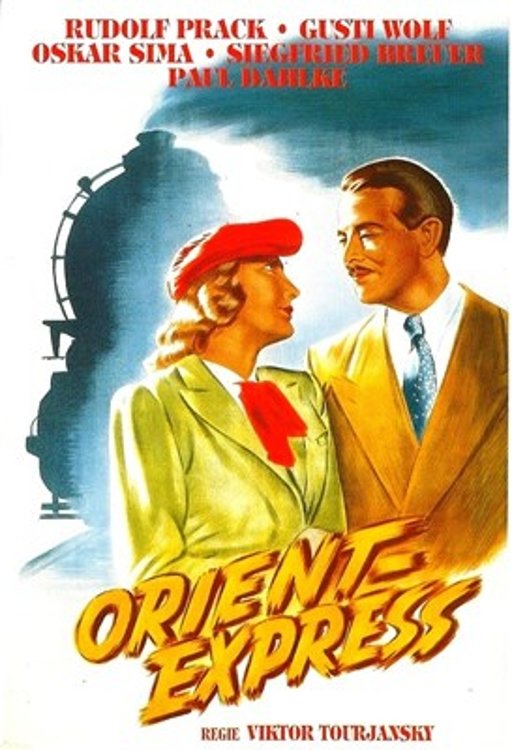
Orient-Express
The emergency braking of the Orient Express causes chaos. When the lights are switched back on, lawyer Branko is found murdered in his compartment. The Rarna Criminal Investigation Department starts investigating immediately. There are several suspects: Baron Hübner and his divorced wife, the seemingly too staid private detective Holzer and the mysterious Vera Panaid. Suddenly, the mysterious case takes a surprising turn...
Insights
Plot Summary
During a train journey on the Orient Express, a valuable necklace is stolen from a wealthy dowager. A sharp-witted investigator, assisted by fellow passengers including a journalist and a former spy, races against time to identify the thief before the train reaches its destination. The investigation leads through a web of international intrigue and hidden identities.
Critical Reception
The 1944 German film 'Orient-Express', directed by G.W. Pabst, is a suspenseful thriller that leverages the confined setting of a train to build tension. While it may not be as widely recognized as some of Pabst's earlier works, it is appreciated for its atmospheric direction and engaging mystery plot, showcasing a competent handling of the crime genre within the limitations of its era.
What Reviewers Say
Praised for its suspenseful atmosphere and intriguing plot.
G.W. Pabst's direction effectively uses the train setting to enhance tension.
A solid mystery thriller from the wartime German film industry.
Google audience: Information regarding Google user reviews for this specific 1944 German film is not readily available.
Fun Fact
This film is actually a remake of a 1934 French film also titled 'Orient-Express', which was based on the Agatha Christie novel 'The Mystery of the Blue Train', though the plot deviates significantly from Christie's work.
AI-generated overview · Verify ratings on official sources