
Movie spotlight
Cut Piece
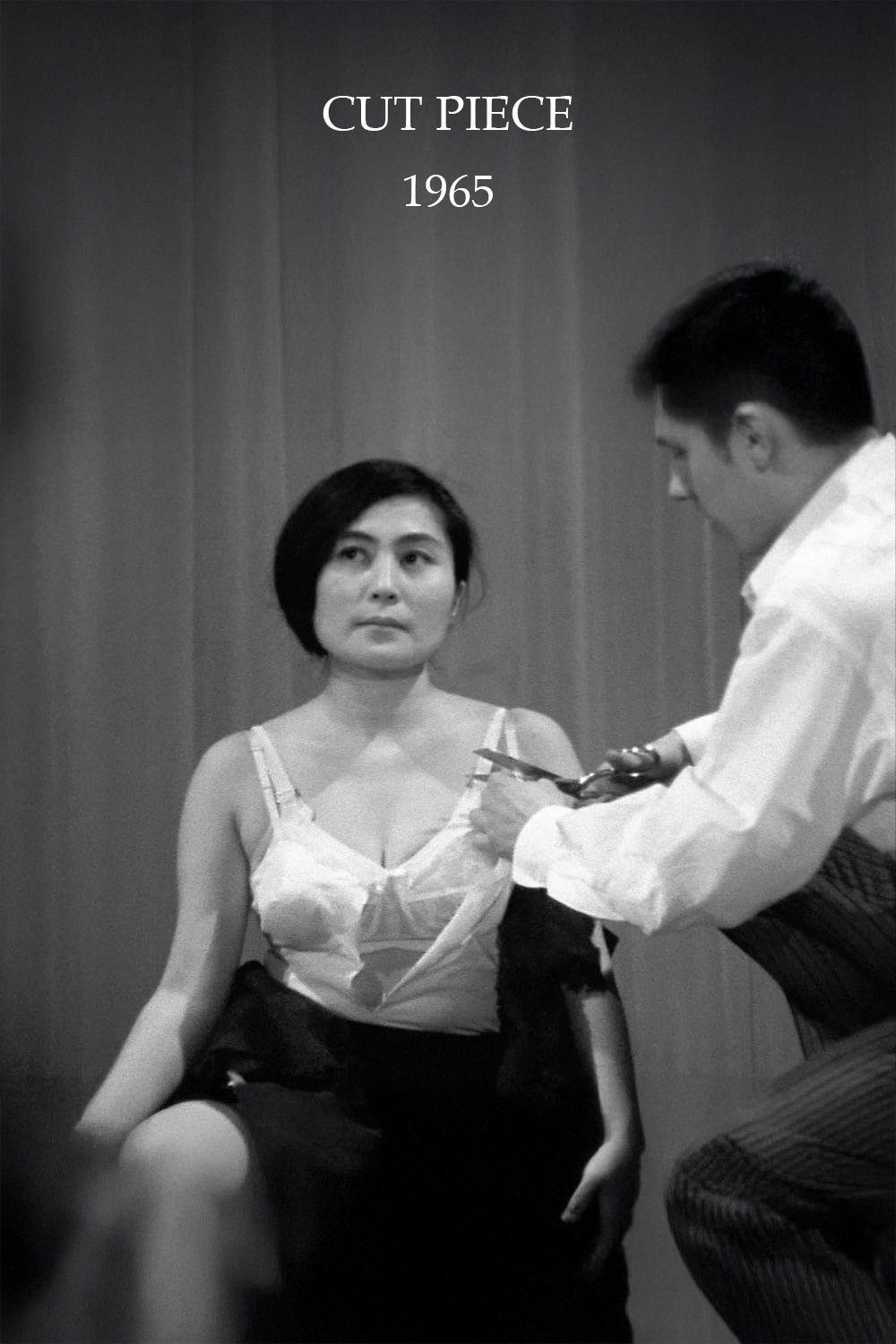
Filmed at New York’s Carnegie Hall, Cut Piece documents one of Yoko Ono’s most powerful conceptual pieces. Performed by the artist herself, Ono sits motionless on the stage after inviting the audience to come up and cut away her clothing in a denouement of the reciprocity between victim and assailant.
Insights
Plot Summary
Cut Piece is a seminal performance art piece created by Yoko Ono in 1964 and first performed in 1965. The piece involves Ono sitting on a stage with a pair of scissors, inviting audience members to come forward and cut a small piece from her clothing. The performance explores themes of vulnerability, consent, and the relationship between the artist and the audience.
Critical Reception
Cut Piece is widely recognized as a groundbreaking work of performance art and conceptual art, lauded for its radical simplicity and profound engagement with social and political issues. It has been influential in feminist art and performance studies, often cited for its exploration of power dynamics and the artist's body as a site of artistic and political discourse.
What Reviewers Say
A powerful and provocative exploration of vulnerability and audience participation.
A landmark piece that challenged traditional notions of art and the artist-audience relationship.
Its enduring impact is a testament to its simple yet profound execution.
Google audience: As a performance art piece, formal reviews and ratings from Google users are not applicable. However, discussions surrounding 'Cut Piece' highlight its significant influence and continued relevance in art discourse.
Awards & Accolades
None notable (as it is a performance art piece, not a film)
Fun Fact
The piece was performed multiple times, with notable performances at the ICA in London (1966) and Carnegie Hall (1971), each time eliciting different reactions and further solidifying its status as an iconic work.
AI-generated overview · Verify ratings on official sources