
Movie spotlight
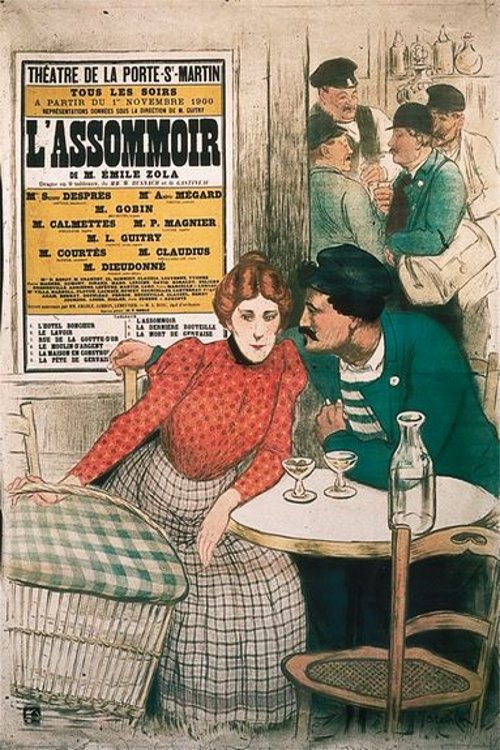
L'Assommoir
Everyman Coupeau's attempts to stop drinking are routinely thwarted by the wicked and vengeful Virginie. Based on Zola's novel, Capellani's film is about the free fall of a group of working-class French folk into degradation and tragedy due to carelessness, jealousy, and alcohol abuse. At the time of its release, L'Assommoir was hugely successful.
Insights
Plot Summary
Gervaise, a young laundress, dreams of a better life and a happy family. She moves to Paris with her lover Auguste Lantier, but he abandons her and their children. She then marries Coupeau, a roofer, and they have a son, Nana. Despite her efforts to create a stable home, Gervaise succumbs to alcoholism, and their lives spiral into poverty and despair, mirroring the harsh realities of working-class life in 19th-century Paris.
Critical Reception
As one of the earliest cinematic adaptations of Émile Zola's naturalistic novel, 'L'Assommoir' was a significant film for its time, attempting to bring a gritty social drama to the screen. While specific critical reviews from 1908 are scarce, the film was noted for its earnest portrayal of working-class struggles and its faithful, albeit condensed, adaptation of the source material. It is considered an important early example of social realism in French cinema.
What Reviewers Say
Praised for its early attempt at social realism in cinema.
Recognized for adapting a significant literary work of its era.
A notable early French film exploring working-class hardship.
Google audience: Information regarding specific Google user reviews for this 1908 film is not available.
Fun Fact
This film is one of the earliest known adaptations of Émile Zola's powerful 1877 novel 'L'Assommoir', which was considered controversial in its time for its unflinching depiction of alcoholism and poverty.
AI-generated overview · Verify ratings on official sources