
Movie spotlight
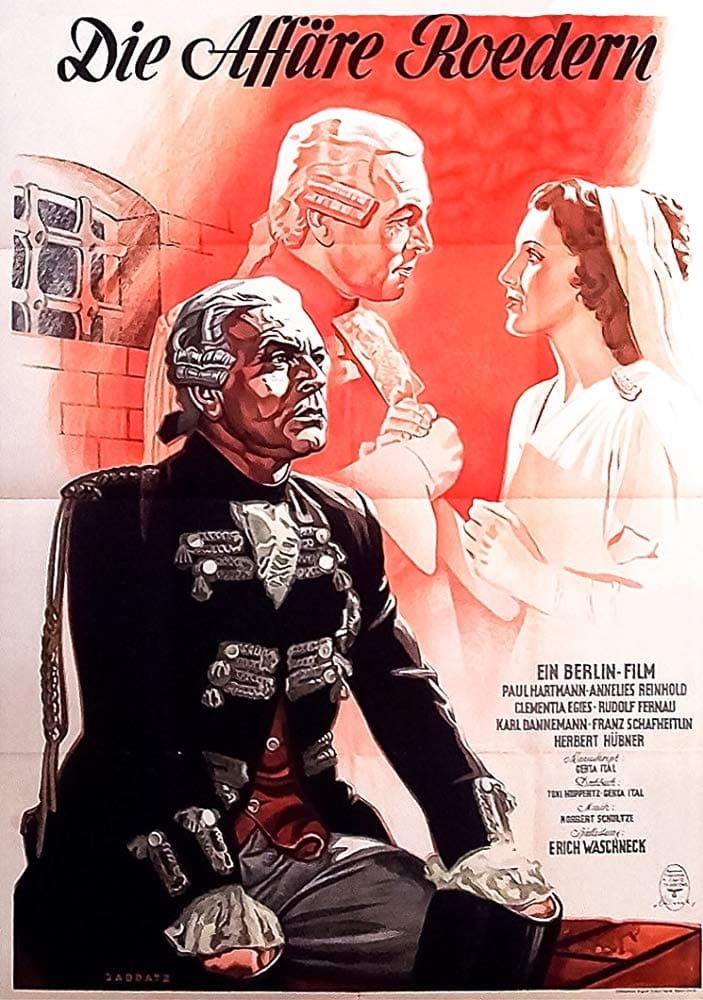
Die Affäre Roedern
Prussia, at the time of Frederick the Great. In his service is Major General Dietrich Edler von Roedern, a renowned fortress builder who pursues his work with fanatical zeal and seriousness. He is not in the mood for women or festivities. Although he is married to Elisabeth, a woman who has gradually become estranged from him due to his nature, this marriage only exists on paper. When Frederick II invites him to a soiree, Roedern meets the singer Maria Raven. The two feel connected from the very beginning, a fateful, invisible bond that seems to chain the two very different people together. For the first time, Dietrich von Roedern experiences something like passionate love.
Insights
Plot Summary
In this German drama, a young woman finds herself torn between her family's expectations and her own desires. As she navigates societal pressures and romantic entanglements, she must make difficult choices that will shape her future. The film explores themes of love, duty, and personal freedom against the backdrop of a changing world.
Critical Reception
As a German production from the Nazi era, critical reception outside of its contemporary context is limited and heavily influenced by the propaganda aims of the time. It was produced to reflect certain societal ideals and was generally well-received within the controlled media environment of the Third Reich. Modern analysis often views it through the lens of its historical period and its role in disseminating state-approved narratives.
What Reviewers Say
The film effectively portrays the internal struggles of its protagonist.
It captures a sense of the societal expectations placed upon women during that era.
The romantic elements are central to the narrative's progression.
Google audience: Audience reviews for this film are scarce, especially from contemporary sources. Historical context suggests it was viewed as a respectable drama that adhered to the prevailing moral and social standards promoted by the German film industry of the 1940s.
Fun Fact
The film was produced by Tobis Filmkunst, one of the major German film studios operating during the Nazi regime, and was intended to align with the era's aesthetic and thematic preferences.
AI-generated overview · Verify ratings on official sources