
Movie spotlight
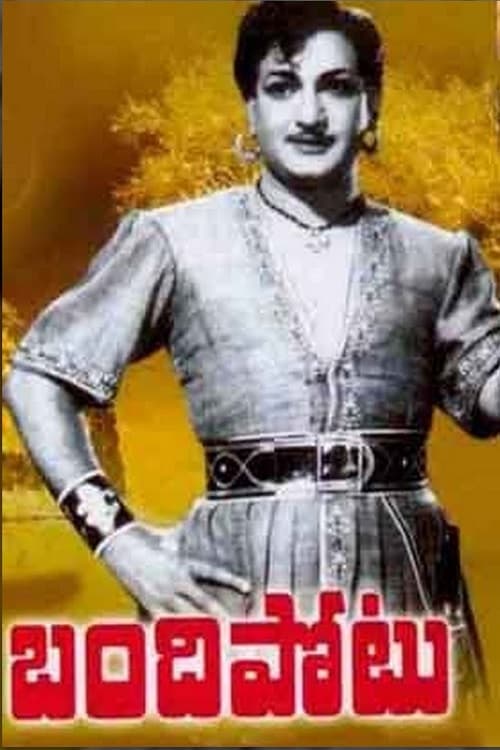
Bandipotu
Sathyasena (Gummadi), the king of Gandhara, suffering from paralytic legs leaves the rule to his vicious brother-in-law Soorasimha (Rajanala), the army commander. Dharma Nayaka (Chittoor V. Nagaiah) is one of the victims of Surasimha’s tyranny. Dharma’s brother Veera Nayaka (Mikkilineni) as a masked man rebels against Surasimha by leading a group of men. He robs the royal wealth and distributes it to the poor. While he is looting the wealth of princess Mandaramala (Krishnakumari), Dharma’s son Narasimha (N. T. Rama Rao) fights with the masked brigand and is surprised to find it is his uncle. He learns from Veera how Soorasimha has ruined their lives. Meanwhile, Surasimha plots to ascend the throne by marrying Mandaramala. In an act of deceit, he eliminates Dharma Nayaka and Veera Nayaka. Narasimha takes the place of Veera Nayaka as the masked rebel, annihilates Soorasimha and ascends the throne after marrying Mandaramala.
Insights
Plot Summary
A brave young man named Veera Bhadra operates as a Robin Hood-like figure, stealing from the rich and corrupt to help the poor and downtrodden in the kingdom. He often clashes with a ruthless landlord and his henchmen who exploit the villagers. Veera Bhadra must also navigate a budding romance while trying to bring justice to his land.
Critical Reception
Bandipotu was a significant commercial success and is remembered for its action sequences and N.T. Rama Rao's charismatic performance. It was generally well-received by audiences for its heroic narrative and entertainment value, solidifying its place as a popular Telugu film of its era.
What Reviewers Say
Praised for its thrilling action sequences and engaging plot.
N.T. Rama Rao's performance as the heroic protagonist was a major highlight.
Successfully blended social commentary with entertainment.
Google audience: Audience reception information for Bandipotu is not readily available through Google reviews.
Fun Fact
The film's theme of a wealthy benefactor helping the poor was a popular trope in Indian cinema during the 1960s, often resonating with audiences concerned with social inequality.
AI-generated overview · Verify ratings on official sources